 Vastu16
Brihat Samhita on house building: Varahamihira's rules
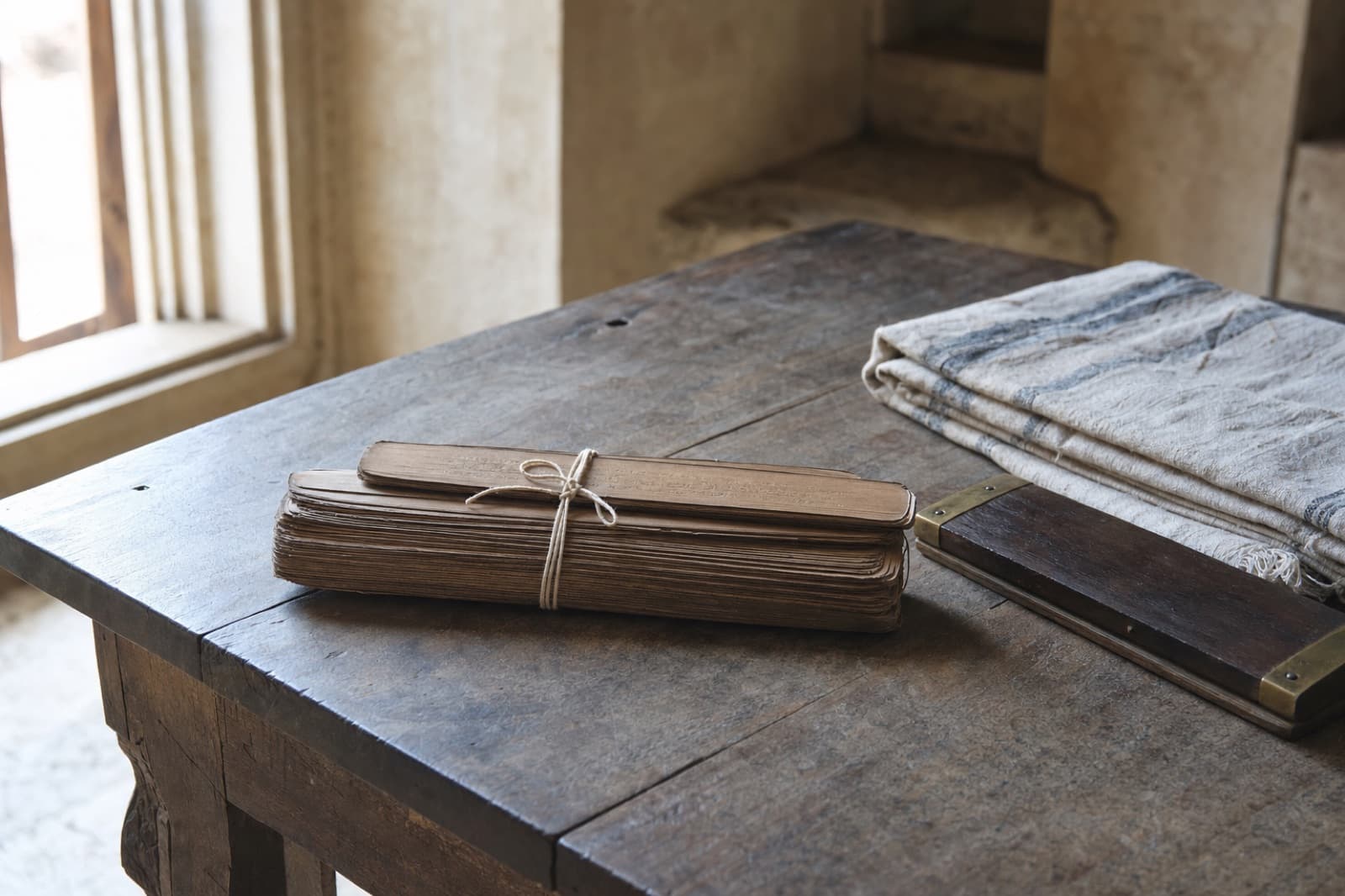
One chapter of 125 slokas holds the Brihat Samhita's Vastu: its house-building chapter, numbered 53 in the 1947 Sastri and Bhat translation. Written by Varahamihira in the 6th century CE, it sets out the site grid, house sizes, doors, site tests and a four-hall house with the kitchen in the south-east and worship in the north-east.
Brihat Samhita Vastu rules turn up all over modern advice, often loosely cited. At Vastu16 we read it in full in the Sastri and Bhat translation, sloka by sloka, so this post can show what the text says, what modern advice took from it, and what it left behind.
Next: your whole home. Rules are general. Your plan is specific. Upload it and see where each room of your home falls under both schools.
Who was Varahamihira, and what is the Brihat Samhita?
Varahamihira was a scholar of the 6th century CE. Kim (2014) dates his text to the early 6th century [2], and Raddock (2011) places the Brihat Samhita in the Gupta period as one of the earliest texts with a substantial section on building [3].
The Brihat Samhita is not a building manual. It is a large compendium covering astrology, omens and many other topics, and the house chapter sits inside it [1]. So "Varahamihira Vastu" means one chapter of a much bigger book.
The date matters for a common myth. Raddock notes that the term vastupurusamandala does not appear in early Vedic literature [3]. Vastu as a written text tradition is therefore about 1,500 years old, not 5,000. Our post on the history of Vastu Shastra traces the later texts, and common Vastu myths covers the age claim and others.
What is in the chapter on house building?
The chapter opens with a myth. The Vastupurusha, a being who lies across the site, is held down by the gods (slokas 2 to 3) [1]. The rest of the chapter turns that image into a plan.
The core device is the grid. Slokas 42 to 48 describe an 81-square diagram, drawn with 10 lines each way, holding 45 deities with Brahma on the nine central squares [1]. Slokas 55 to 56 give a 64-square alternative with Brahma on four squares [1]. Kramrisch (1946) calls the 64 and 81 grids the two main types of the Vastu diagram and cites this chapter for them [7].
The centre gets special care. Sloka 66 says Brahma at the centre is to be protected, not hurt by remnants of food and the like, and slokas 57 to 64 name vulnerable points, or marmas, that must not be struck [1]. Our Vastu glossary defines Brahmasthan, marma and pada.
Sizes, doors and site: what does Varahamihira prescribe?
Sizes. Slokas 4 to 15 give house dimensions by rank, starting with a king's house 108 cubits wide, and houses for four social classes from 32 down to 16 cubits [1]. Slokas 24 to 27 give formulas for door height and width [1].
Doors. Slokas 71 to 75 list the result of a door at each of 32 positions around the plan, and the results vary pada by pada [1]. No single direction is called best. Our Vastu pada calculator shows which of the 32 positions your own door sits in. Slokas 76 to 78 reject a door struck by a road, tree, well or pillar, or one facing Brahma's square. Slokas 79 to 81 reject doors that open by themselves or are too big or too small [1].
Site. Sloka 91 assigns a site slope by social class: north, east, south or west [1]. Slokas 92 to 97 describe pit, water, lamp, flower and soil-colour tests, and slokas 112 to 113 start the foundation at the north-east corner [1].
Rooms. Sloka 118 describes a four-hall house: worship room in the north-east, kitchen in the south-east, store-room in the south-west, and treasury or granary in the north-west [1]. Slokas 115 to 116 disfavour a house raised on the east or north and call a level house best, and sloka 117 faults a rise toward any of the four directions [1].
Which Brihat Samhita Vastu rules carry into modern advice?
A few lines of this chapter run straight into today's advice. Many others did not survive.
The south-east kitchen is the clearest case. Sloka 118 is the earliest source we opened for it [1]. In Vastu16's rule table, the traditional 8-direction school rates a south-east kitchen as good, and the 16-zone school rates SE, SSE, S, W and NW as good zones for it [8]. The Vishwakarma Prakash, a North Indian text whose date we could not verify, also puts the kitchen in the south-east (ch. 2, vv. 94 to 97) [4]. Other texts disagree: the Manasara puts kitchens in the north, north-east or Parjanya quarter (ch. XXXVI, v. 26) [6], and the Mayamata places the granary, not a kitchen, on the south-east square [5].
The protected centre also carries over. Both schools in our table rate a kitchen, toilet or staircase at the centre as one to avoid [8].
The door rules changed the most. Varahamihira judges 32 positions one by one. Modern 8-direction practice simplifies that to "north, north-east and east are good" [8]. Our guide to the two schools shows how the 16-zone school splits the circle more finely.
The class-based sizes and slopes, the tree omens and the cubit formulas have mostly dropped out of flat-buying advice.
Checklist
Use this table when someone cites the Brihat Samhita
When a consultant or a website says "the Brihat Samhita says", find the rule here and check the sloka.
| Rule in the Brihat Samhita | Ch. 53, sloka (Sastri and Bhat) | How it appears in modern advice |
|---|---|---|
| Vastupurusha held down by the gods | 2 to 3 | The Vastu Purusha figure on modern charts |
| 81-square grid, Brahma on nine central squares | 42 to 48 | "Grid" or "Purusha mandala" schools |
| 64-square grid, Brahma on four squares | 55 to 56 | Alternative grid; texts differ on which to use |
| Protect the centre and the marmas | 57 to 66 | "Keep the Brahmasthan open"; no kitchen, toilet or stairs at centre |
| Door results at 32 positions; no single best side | 71 to 75 | Simplified to "north, north-east, east doors are good" |
| Doors not struck by road, tree, well or pillar | 76 to 78 | Advice on T-junctions and pillars facing the door |
| Site slope by social class | 91 | Mostly dropped |
| House not raised on the east or north | 115 to 116 | "Keep the north-east low and light" |
| Kitchen south-east, worship north-east | 118 | South-east kitchen and north-east pooja rules |
Checking a claim in three steps
- Ask for the sloka number and the translation used. Numbering differs: Kramrisch cites this chapter as 52 [7].
- Open the translation and read the sloka with its neighbours.
- Check whether the modern claim adds anything the sloka does not say, such as an outcome or a product.
What is tradition and what is fact
Tradition
- Kitchen south-east, worship north-east, store south-west, treasury north-west: Brihat Samhita, ch. 53, sloka 118 [1].
- Kitchens in the north or north-east: Manasara, ch. XXXVI, v. 26 [6].
- Brahma's centre protected: Brihat Samhita, ch. 53, sloka 66 [1].
- Modern zone ratings: Vastu16's rule table, both schools [8].
Physical and scholarly fact
Where Vastu16 fits
Vastu16 does not apply the Brihat Samhita line by line. It runs two modern schools whose rules are published on our methodology page. You can see how your plan reads under the 16-zone and 8-direction schools for free: the check places each room by zone and shows where the schools agree or split. It does not apply class-based sizes, door padas, site slopes or any astrology. For the text behind it, our post on the Mayamata is the next read.
Where to read a translation
The 1947 English translation by V. Subrahmanya Sastri and M. Ramakrishna Bhat, with Sanskrit and notes, is on the Internet Archive [1]. Its preface names two earlier English translations, by H. Kern and by Chidambara Iyer, and says neither was available by 1947 [1]. We could not find readable copies, so this post does not rely on them.
Questions people ask
What does the Brihat Samhita say about Vastu?
Its house-building chapter, numbered 53 in the 1947 Sastri and Bhat translation, covers the Vastupurusha myth, house sizes by social class, the 81-square and 64-square site grids, door placement across 32 positions, site slope and soil tests, and a four-hall house with worship in the north-east and the kitchen in the south-east. It runs to 125 slokas.
Who was Varahamihira?
Varahamihira was an Indian scholar of the 6th century CE, and his Brihat Samhita is a compendium of astrology and omens. Kim (2014) dates it to the early 6th century and Raddock (2011) to the Gupta period, which makes it one of the earliest texts with a substantial chapter on building. That puts written Vastu at about 1,500 years old.
Is the Brihat Samhita an astrology text?
Partly. The Brihat Samhita is a broad compendium that includes astrology, omens and many other subjects, and the house-building chapter is one section of it. Reading that chapter does not require any astrology. Vastu16 uses no astrology at all: its check reads room positions against two published rule tables and nothing else.
Related posts
History of Vastu Shastra: the texts and how it changed
The history of Vastu Shastra in its texts: Brihat Samhita, Mayamata, Manasara and more, what each covered, and how modern schools grew from them.
Mayamata explained: what the Vastu text actually says
The Mayamata is a southern Indian treatise on building. What its chapters cover, what it says about sites and houses, and where to read it.
12 Vastu myths, checked against the texts
South facing homes are bad, a north-east toilet cannot be lived with, cactus is unlucky: 12 popular Vastu myths checked against the texts.
Sources
- Brihat Samhita of Varahamihira (chapter on house-building)
- Kim (2014), Vastupurusamandala revisited
- Raddock dissertation (Hayasirsa Pancaratra and the vastupurusamandala)
- Vishwakarma Prakash (Sanskrit with Hindi commentary "Abhaya")
- Mayamata (Dagens critical edition and English translation), Vol. II
- Manasara (Acharya translation, 1934)
- The Hindu Temple (Kramrisch, 1946), Vol. I
- Vastu16 methodology and rule table (internal)