 Vastu16
East facing flat Vastu: entrance, balcony and rooms
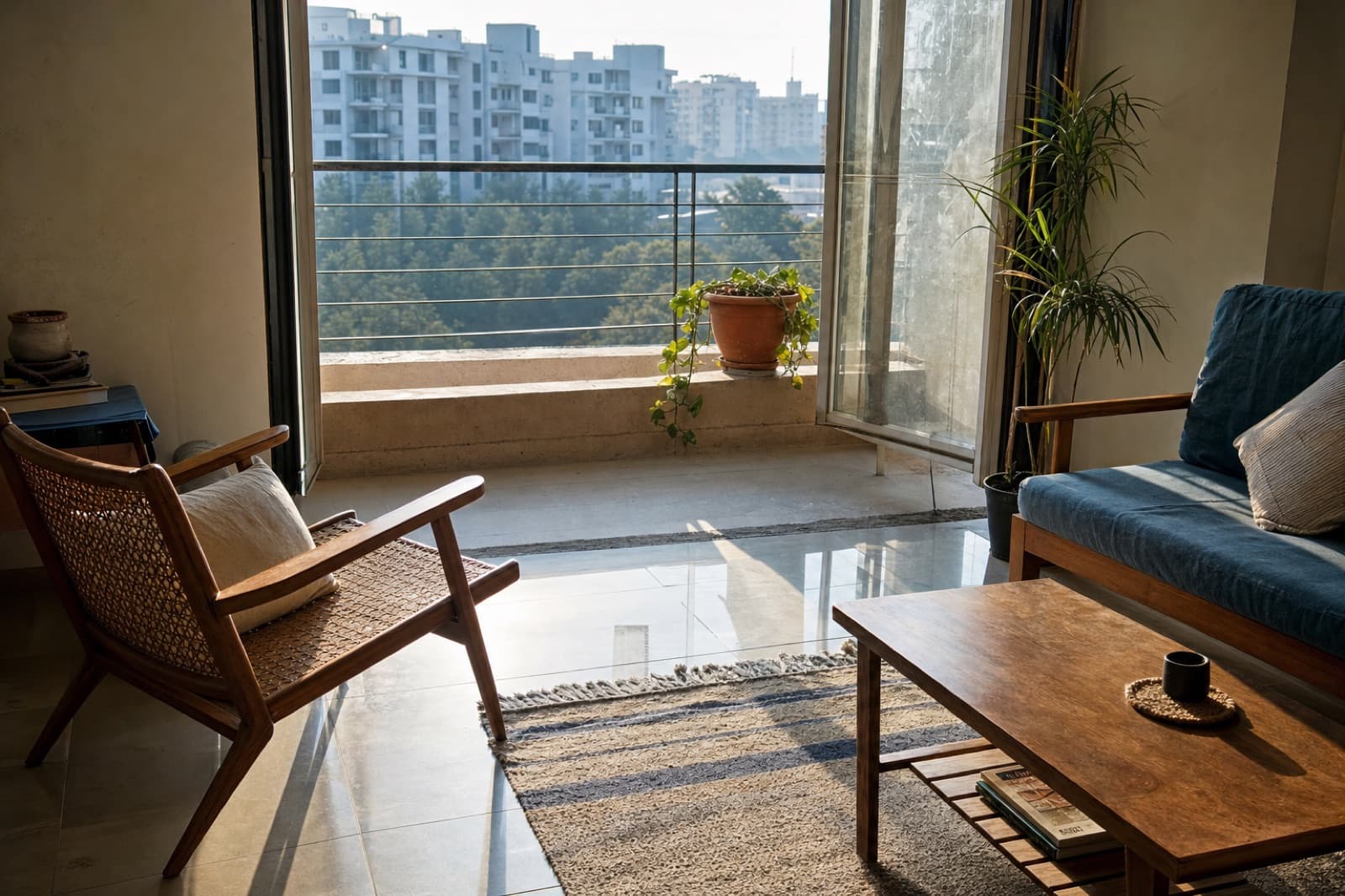
Good in both schools: a main door in the E or NE zone carries the preferred reading under the 16-zone and the traditional 8-direction school. That is why buyers shortlist east facing flats. The label still hides one zone to avoid at the south end, and it says nothing about the kitchen or toilets.
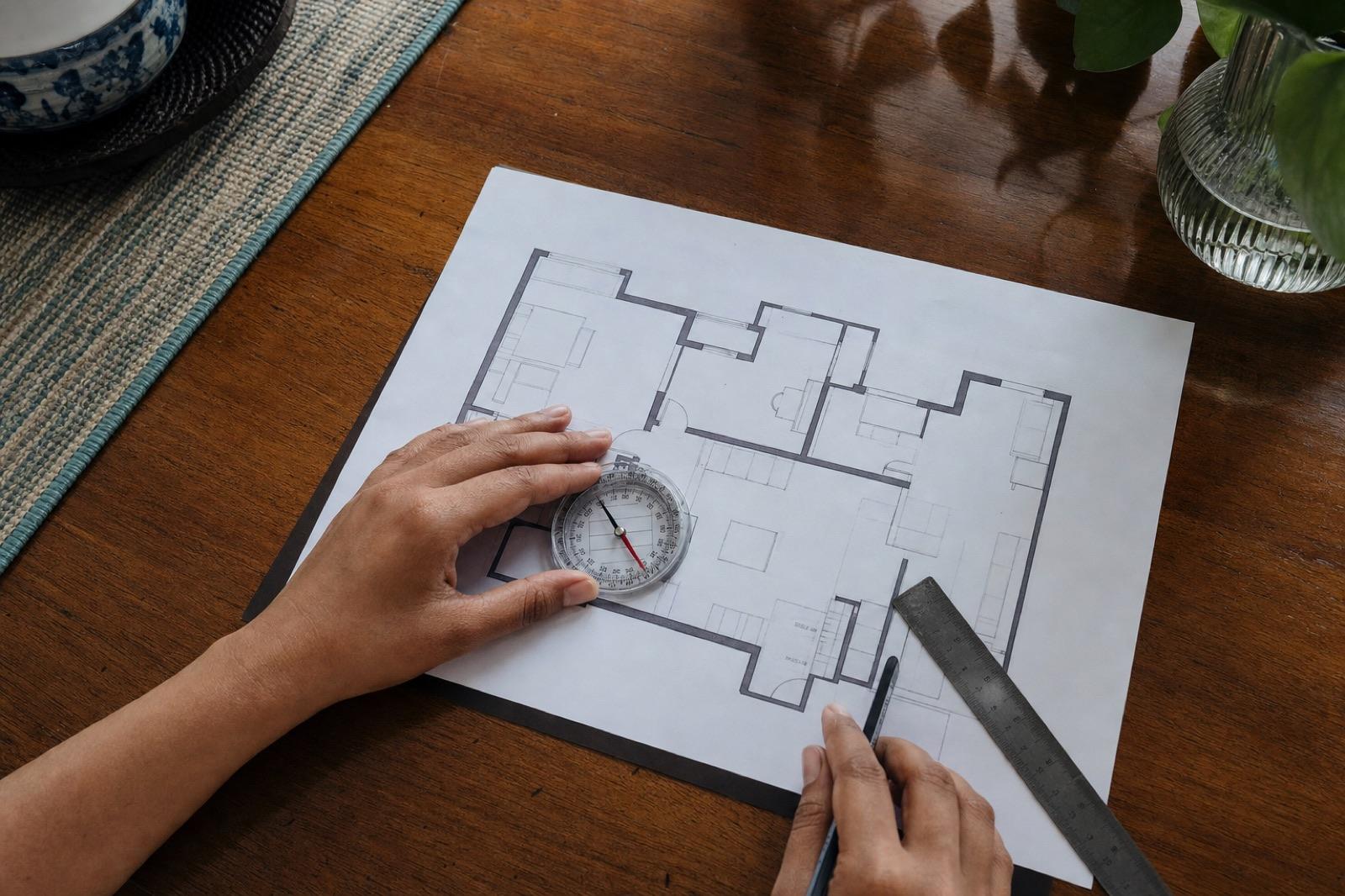
Next: your whole home. Rules are general. Your plan is specific. Upload it and see where each room of your home falls under both schools.
Stand in the middle of your home. Which way is your main entrance? Tap its zone on the wheel.
Good Neutral Avoid North is up. Zones are measured from the centre of the home.
East facing flat Vastu: the short answer
East facing flat Vastu starts with the main door, and the east side starts well. Two of its zones, E and NE, read as good in both schools in Vastu16's rule table [1]. Chawla's 2020 paper, a 2014 survey of 200 Udaipur households, recorded homes on every facing, but its tables disagree on the split, so it cannot tell you which facing is most common [2].
The catch is at the south end of the east wall. In the 16-zone school, a door in the ESE zone is one to avoid, severity 3 of 5. In the 8-direction school, a door in the south-east is severity 2 of 5 [1]. A flat sold as "east facing" can have its door there.
Facing also gets used loosely. Settle what it means for your unit with our post on how to know the facing of a flat. How an east facing independent house reads is on our east facing house page. This post covers flats.
East entrances under both schools
Here is how a main door reads along the east side, from the north-east corner to the south-east corner [1].
| Door zone | 16-zone school | 8-direction school |
|---|---|---|
| NE | Good | Good |
| ENE | Neutral | Good (NE and E both good) |
| E | Good | Good |
| ESE | Avoid, severity 3 of 5 | Split: E good, SE avoid 2 of 5 |
| SE | Neutral | Avoid, severity 2 of 5 |
The schools disagree at three points. ENE is neutral in the 16-zone school and good in the 8-direction school. ESE is a clear avoid in the 16-zone school, while the 8-direction school's line between E and SE runs through it. At the SE corner, the 8-direction school is the stricter one [1]. Our guide to the 16-zone and 8-direction schools explains why the slices fall where they do.
The classical texts name an east door square too. The Mayamata lists Mahendra, on the east side of the 81-square grid, among the four auspicious door squares (30.44-47a) [3]. The Manasara names the Mahendra quarter for the east door (XXXVI.66-67) [4]. Every zone's reading is on our main door direction page.
Why 'east facing' alone is not enough
A facing label describes one wall. Vastu16's check reads every tagged room by its own zone, and the door is only one finding among several [1].
Three things can sit behind a good east door. The door can drift into ESE. The kitchen can land in the north-east, because some plans put the kitchen near the entrance. A toilet can sit in the north-east corner, which both schools rate severity 5 of 5 [1].
The balcony is the flat-specific part. In Vastu16's table, a balcony in the N, NNE, NE, ENE or E zones reads as good in the 16-zone school, and N, E or NE in the 8-direction school [1]. An east balcony is the one feature the label reliably gets right.
East also brings morning sun. The National Building Code's solar table shows east faces receive more radiation in summer than in winter [5]. The Bureau of Energy Efficiency weights an east wall at 1.155 for heat gain, against 0.659 for north, for latitudes under 23.5 degrees north [6]. East glass still needs shade from the summer morning sun.
Kitchen and toilet placements in typical east facing layouts
In some east facing flats, the kitchen and a toilet sit on the east side near the door. Here is how those placements read [1].
| Placement | 16-zone school | 8-direction school |
|---|---|---|
| Kitchen in NE | Avoid, severity 4 of 5 | Avoid, severity 4 of 5 |
| Kitchen in E | Neutral | Neutral |
| Kitchen in ENE | Neutral | Split: NE avoid 4 of 5, E neutral |
| Kitchen in SE | Good | Good |
| Kitchen in SSE | Good | Split: SE good, S neutral |
| Toilet in NE | Avoid, severity 5 of 5 | Avoid, severity 5 of 5 |
| Toilet in E | Avoid, severity 2 of 5 | Avoid, severity 2 of 5 |
| Toilet in ESE | Good | Neutral or avoid 2, by side of the line |
| Toilet in SE | Avoid, severity 4 of 5 | Neutral |
The south-east toilet is the sharpest split. The 16-zone school rates it 4 of 5, while the 8-direction school has no reading for it [1]. The check shows both instead of hiding one.
The kitchen is a known disagreement in the texts too. The Brihat Samhita (53.118) and the Vishwakarma Prakash (2.94-97) put it in the south-east [7][8], while the Manasara puts kitchens in the north or north-east (XXXVI.26) [4]. Vastu16's table follows the south-east tradition. For a two-bedroom unit, our 2 BHK flat reading shows how every room type scores.
Checklist
Checks for an east facing unit
Use this on the floor plan, then again at the site visit.
- Door zone. Find North and mark the main door. E or NE is good in both schools. ENE is neutral in the 16-zone school. ESE is severity 3 of 5 in the 16-zone school.
- Kitchen. SE is good in both. SSE is good in the 16-zone school. NE is severity 4 of 5 in both.
- Toilets. Any toilet in NE is severity 5 of 5 in both. A south-east toilet is severity 4 of 5 in the 16-zone school.
- Master bedroom. SW, S or W reads good in both schools.
- Balcony. An east or north-east balcony reads good in both.
- Morning sun. Is the east glass shaded in summer?
If you are comparing an east unit with a west one across the corridor, our post on the west facing flat covers the other side.
What is tradition and what is fact
Tradition
- East door square (Mahendra) among the four auspicious ones: Mayamata, 30.44-47a [3].
- East door in the Mahendra quarter; kitchens in the north or north-east: Manasara, XXXVI.66-67 and XXXVI.26 [4].
- Door, kitchen, toilet and balcony readings by zone: Vastu16's rule table [1].
Physical fact
- East faces receive more solar radiation in summer than in winter: NBC 2016, Part 8, Table 3 [5].
- East wall heat-gain weighting 1.155, north 0.659: Eco-Niwas Samhita 2024, Table 49, latitudes under 23.5 degrees north [6].
- Homes on every facing in 200 Udaipur households, self-reported, 2014; the paper's tables disagree on the split: Chawla 2020 [2].
Where Vastu16 fits
Vastu16 reads each tagged room's zone under both schools after you confirm North, and shows where they agree and where they split. You can check an east facing flat's floor plan under both schools and see whether its door sits in E, ENE or ESE. The check does not measure sunlight or ventilation, and it does not tell you which flat to buy.
Questions people ask
Is an east facing flat good as per Vastu?
Usually, yes. A main door in the E or NE zone reads as good in both schools Vastu16 uses. The label alone does not settle it, because a door in the ESE zone is one to avoid in the 16-zone school, severity 3 of 5, and the kitchen and toilet zones still need their own check.
Which entrance is best in an east facing flat?
A door in the E or NE zone, which both the 16-zone and the traditional 8-direction school read as good. ENE is good in the 8-direction school and neutral in the 16-zone school. Avoid ESE (16-zone, severity 3 of 5) and the south-east corner (8-direction, severity 2 of 5).
Is every east facing flat Vastu compliant?
No. Facing describes one wall or one door. A flat with a good east door can still have a kitchen in the north-east, severity 4 of 5 in both schools, or a toilet in the north-east, severity 5 of 5 in both. Check the door zone first, then the kitchen, toilets and master bedroom.
Related posts
How to know the facing of a flat: door, balcony or tower?
Brokers say east facing, the plan says otherwise. Three definitions of a flat's facing, which one Vastu uses, and how to measure yours.
West facing flat Vastu: what to check before booking
A west facing flat is not a defect in either school. How the entrance zone, balcony and afternoon sun decide whether one suits you.
North facing flat Vastu: entrance zones and layout
North facing flat Vastu: no north door zone is one to avoid in either school. Which zones read as good, and what to check inside the unit.
Sources
- Vastu16 methodology and rule table (internal)
- Chawla (2020), survey of Vastu application in Udaipur homes
- Mayamata (Dagens critical edition and English translation), Vol. II
- Manasara (Acharya translation, 1934)
- National Building Code of India 2016, Volume 2, Part 8 Building Services, Section 1 Lighting and Natural Ventilation
- Eco-Niwas Samhita (ENS) 2024, Energy Conservation and Sustainable Building Code (residential)
- Brihat Samhita of Varahamihira (chapter on house-building)
- Vishwakarma Prakash (Sanskrit with Hindi commentary "Abhaya")