 Vastu16
Plot facing vs house facing: road side or front door?
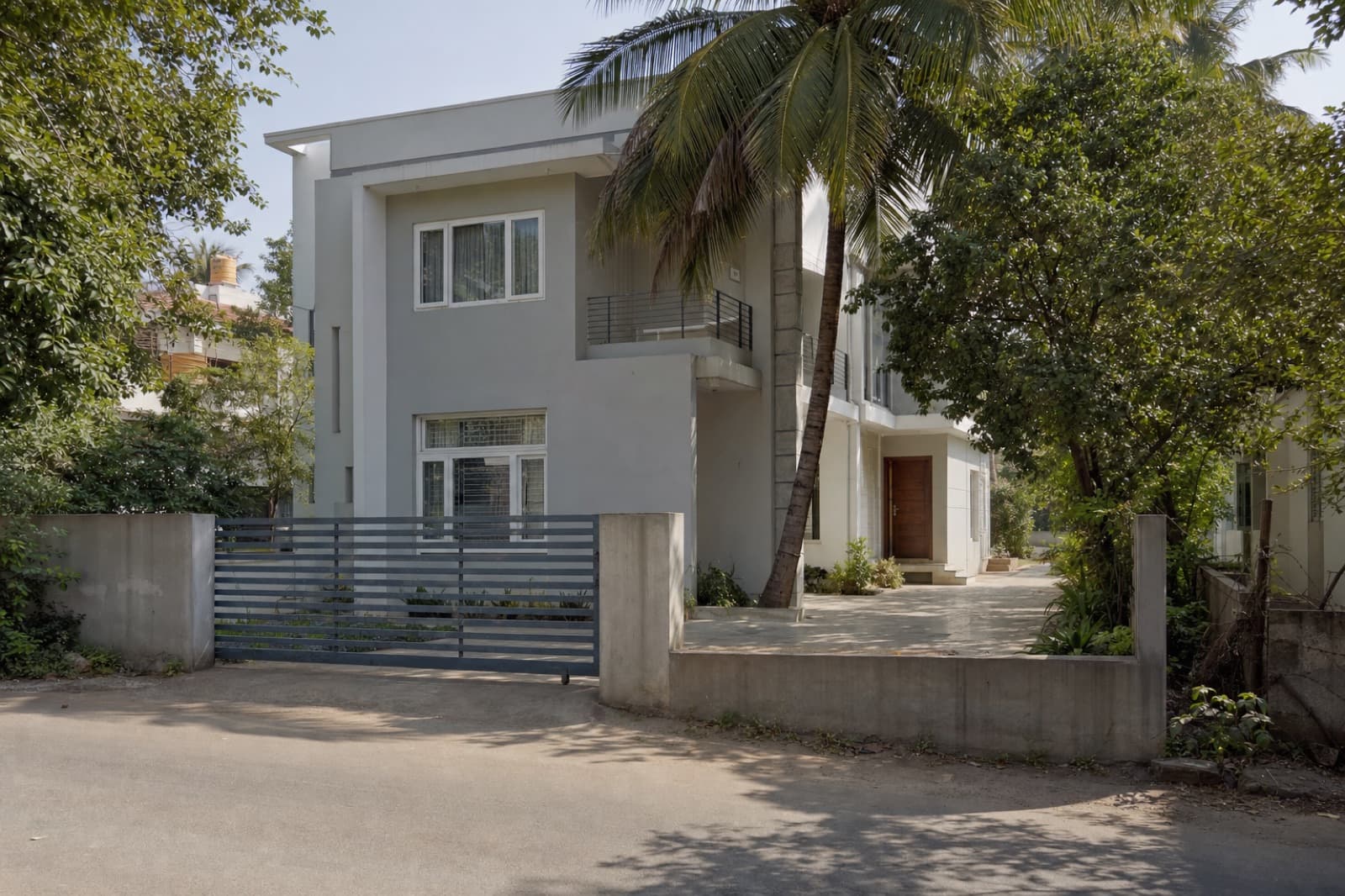
Two different things get called "facing". Plot facing vs house facing comes down to this: the plot faces the road it touches, and the house faces the way you look out of the main door. When they differ, use the door for the Vastu reading, and write both on the drawing so everyone means the same thing.
The mix-up is common. A seller says "north-facing plot", the architect draws the entrance on the east wall, and a relative asks whether the house is now east-facing. All three are describing different facts. At Vastu16 we read a home by its main door, and this post explains why, with what the classical texts say about doors and roads.
Next: your whole home. Rules are general. Your plan is specific. Upload it and see where each room of your home falls under both schools.
Plot facing vs house facing: the short answer
- Plot facing is the side where the plot meets the road. A plot with the road along its north edge is a north-facing plot.
- House facing is the direction you look when you stand at the main door and look out. A door on the east wall makes the house east-facing, whatever side the road is on.
- For the reading, the main door counts. Vastu16 measures the door's zone from the centre of the house and reads it under two schools [1].
On most narrow city plots the door sits on the road side, so the two facings match. They split on wide plots, corner plots, and plans where the door opens off a side passage or a porch. In those cases, "which way does it face" has two honest answers, and both belong on the drawing.
Plot facing: the road side
Plot facing describes the land. It tells you where access, the gate, parking and the frontage will be. Sale listings use it because it is easy to see from the street. A 2014 survey of 200 households in Udaipur asked about facing [5]. The paper's table calls it the direction of the plot, its text calls it the direction the houses face, and two of its tables give different figures for the south. That is self-report from one city, and it shows how easily the two terms get mixed.
The classical texts care about roads around a site, but as features, not as the facing of the house. The Mayamata rejects sites crossed by roads (ch. 3, vv.10b-19) [2]. The Manasara lists a site at a junction of paths among those to avoid (IV.27) [3]. The Brihat Samhita reads a door struck by a road as a fault (53.76-78) [4].
How to find plot facing is simple: stand on the road, face the plot, and the plot faces you, so its facing is the opposite of the way you are looking. More on choosing a plot by road side is in the best direction for a plot.
House facing: the door
House facing describes the building. The classical texts judge entrances by the door's position on the wall, not by the road. The Mayamata places doors on the Mahendra (east), Raksasa (south), Puspadanta (west) or Bhallata (north) squares of the 81-square grid, and none opposite Brahma's central square (30.44-49) [6]. The Manasara names a similar set: Mahendra, Pushpadanta, Mukhya and Grihakshata (XXXVI.66-67) [3]. The Brihat Samhita gives a different result for a door at each of 32 positions round the house (53.71-75) [4].
So in road facing vs door facing Vastu, the texts point at the door. Vastu16 does the same. Our main door page shows which zones each school reads as good or to avoid.
One practical note: a gate in the compound wall is not the main door. Vastu16's check scores the main door of the house, not the gate. Gate guidance you may hear is practitioner advice, not a rule from our table.
How the two facings combine
The table shows common plots and how each would be described and read.
| Road side | Main door on | Plot facing | House facing | Reading uses |
|---|---|---|---|---|
| North | North wall | North | North | Door zone on the north side |
| North | East wall | North | East | Door zone on the east side |
| East | East wall, near the north-east corner | East | East | Door zone near north-east |
| North and east (corner) | North wall | North and east | North | Door zone on the north side |
| South | West wall, via a side passage | South | West | Door zone on the west side |
Take the second row. The plot faces north, the door is on the east wall, and the house faces east. In Vastu16's rule table, an east door reads as good in the traditional 8-direction school. In the 16-zone school, the east side spans three zones: E reads as good, ENE as neutral, and ESE as one to avoid at severity 3 of 5 [1]. Where the door sits along the wall matters as much as which wall it is on.
Corner plots with two roads
A corner plot touches two roads, so it has two plot facings. Sellers often name the better-sounding one. The texts we read do not give a rule for naming a corner plot's facing. They read the door, and they treat road junctions as a site feature (Manasara IV) [3].
For a corner plot, keep three facts apart:
- Both road sides. Write them down, for example "north and east".
- The door's side and position. Which wall, and how far along it.
- The door's zone. Measured from the centre of the house, not from the corner of the plot.
The texts we read give no rule on how much weight the second road deserves. Vastu16's check does not score a second road frontage. It scores the door and the rooms. A north-and-east corner plot with the door on the north wall reads like a north-facing house; our north facing house page shows both schools' readings for that side. On a detached house with open sides all round, the villa and independent house page covers the other rooms.
What to tell your architect
Most disagreements on site come from loose words, so put both facings in writing.
- "The plot faces north. The road is on the north boundary."
- "The main door is on the east wall, about one-third of the way from the north-east corner."
- "Please mark true north on every drawing, and mark the centre of the house outline."
- "Please give two door positions on the same wall, so we can compare zones before the plan is fixed."
If the plan is still a sketch, moving a door along the same wall is often free. Vastu16's remedy list puts that first for entrances at plan stage: ask whether the door can shift along the same wall into the neighbouring zone [1]. Our 30x40 north facing house plan shows how door positions along one frontage read differently. A fuller walk-through of that plot type is in north facing plot Vastu.
Checklist
Decision steps for any plot
Use these on a site visit or with the drawing open on your phone.
- Record the road side or sides. Stand on the road, note the compass side of the plot it touches. Write "plot facing: north" or "north and east".
- Find the main door. Note the wall it is on and its distance from the nearest corner.
- Stand at the door and look out. The direction you face is the house facing.
- Find the centre of the house. Use the house outline, not the plot boundary.
- Read the door's zone from the centre. Use that zone for the reading under both schools.
- Write both facings on the drawing. For example: "Plot north. House east. Door zone E."
For flats, where there is no plot of your own, facing works differently; see how to know the facing of a flat.
What is tradition and what is fact
Tradition
- Doors placed on named squares of the grid on each side: Mayamata 30.44-49; Manasara XXXVI.66-67.
- A result for a door at each of 32 positions; a door struck by a road is a fault: Brihat Samhita 53.71-78.
- Sites crossed by roads or at road junctions are rejected: Mayamata ch. 3; Manasara IV.
Physical fact
- Plot facing and door facing are two separate facts about a property, and both can be checked on site with a compass and the drawing.
- A 2014 Udaipur survey of 200 households mixes plot and house facing, and its tables disagree on the split [5].
- Reading the door's zone from the house centre is Vastu16's method, not outside evidence [1].
Where Vastu16 fits
Once the door is on the drawing, you can check your plan's door and rooms under both schools. The tool takes the rectangle you draw around the house and the north you verify, uses the middle of that rectangle as the centre, and reads the main door and every tagged room under the 16-zone and 8-direction schools. It does not score the road, a second frontage or the compound gate, and it says so in the report.
Questions people ask
Is plot facing the same as house facing?
Not always. Plot facing is the side of the plot that meets the road. House facing is the direction you look when you stand at the main door and look out. On many plots they match, but an architect can put the door on a side wall, and then the plot and the house face different ways.
Which matters more in Vastu: road or door?
For reading a home, the door. The Mayamata, Manasara and Brihat Samhita all judge the entrance by where the door sits on the wall, square by square. Vastu16 reads the main door by its zone measured from the centre of the house. The road side still matters for access, light and the gate.
How is a corner plot's facing decided?
A corner plot has two road sides, so it has two plot facings, for example north and east. The classical texts we read give no rule for naming one of them. In practice, the house facing follows the side that holds the main door, and the reading uses that door's zone.
Related posts
Best direction for a plot as per Vastu: how to choose
Choosing land? How Vastu reads plot facing, roads, shape and slope, what to check on site, and what you can design around later.
North facing plot Vastu: entrance, layout and checks
A north facing plot gives the most preferred entrance zones. Where to put the gate and door, a sample zoning, and what to check on site.
How to know the facing of a flat: door, balcony or tower?
Brokers say east facing, the plan says otherwise. Three definitions of a flat's facing, which one Vastu uses, and how to measure yours.
Sources
- Vastu16 methodology and rule table (internal)
- Mayamata (Dagens critical edition and English translation), Vol. I
- Manasara (Acharya translation, 1934)
- Brihat Samhita of Varahamihira (chapter on house-building)
- Chawla (2020), survey of Vastu application in Udaipur homes
- Mayamata (Dagens critical edition and English translation), Vol. II