Vastu16
Studio apartment Vastu: one room, every zone
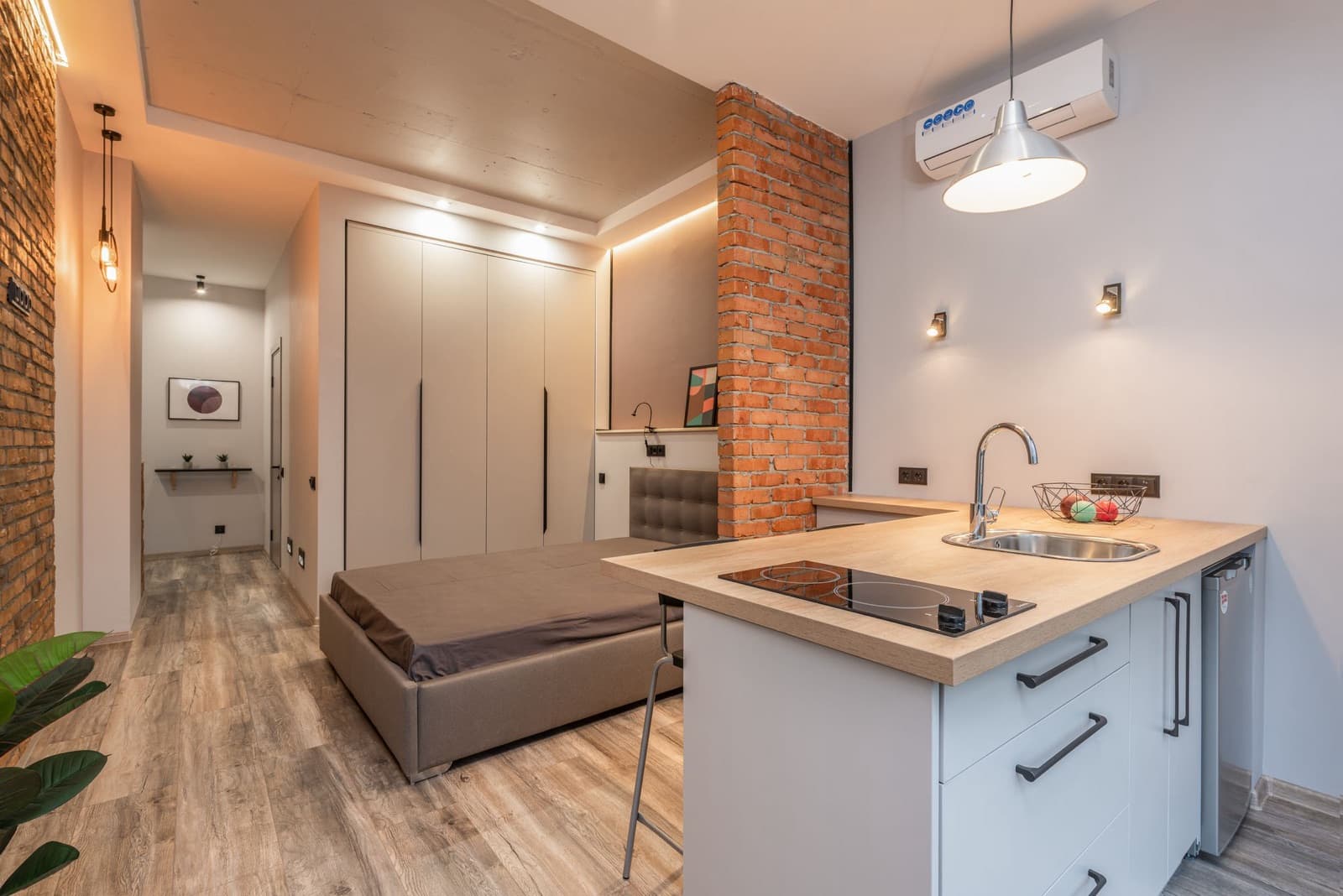
Sixteen zones still apply in a studio: they simply sit inside one room. Find the centre of the whole unit, then put the bed towards the south-west, the hob on the south-east side, and the desk facing east or north. The kitchenette, toilet and door are usually fixed, so the bed and desk are where your choices are.
Vastu for studio apartment layouts works the same way as for a larger flat. Vastu16 measures every zone from the centre of the home, and in a studio the home is one room plus a bathroom. The difference is that four uses share the same floor, so each one is placed by part of the room rather than by room. Our 1 BHK flat page reads separate rooms; this post is about zones within one.
Next: your whole home. Rules are general. Your plan is specific. Upload it and see where each room of your home falls under both schools.
Vastu for a studio apartment: zones in one room
Draw the outline of the whole unit, including the bathroom and the kitchenette, and find its centre. For a rectangle, the centre is where the diagonals cross. Every point in the room then has a bearing from that centre, and that bearing gives its zone [1].
In a small studio, the zones are small too. A sleeping corner can be one zone and the desk a metre away can be another. That makes North accuracy more important, not less. Vastu16's check flags any item within 5 degrees of a zone line, because a small error in North would move it [1].
The centre itself matters too. Both schools read a kitchen or a toilet at the centre of the home as one to avoid, at severity 4 of 5 for a kitchen and 5 of 5 for a toilet [1]. In a studio, the centre usually falls in open floor, which is the reading both schools prefer. Vastu16's furniture guidance adds: keep heavy furniture off the centre [1].
Bed, kitchenette and desk
Tag the sleeping area as the master bedroom when you run the check. These are the readings for each use, by zone of the whole unit [1]:
| Use | 16-zone school: good | 16-zone: avoid | 8-direction: good | 8-direction: avoid |
|---|---|---|---|---|
| Sleeping area (master bedroom rules) | SW, S, WSW, W | ESE, SSW, WNW (3 of 5); NE (2 of 5) | SW, S, W | NE (3 of 5); SE (2 of 5) |
| Kitchenette | SE, SSE, S, W, NW | N, NNE, NE (4 of 5); SW (3 of 5) | SE, NW | NE (4 of 5); SW, N (3 of 5) |
| Desk (study rules) | WSW, NE, E, W | ESE, SSW, WNW (2 of 5) | NE, E, N, W | none |
Bed. The south-west quarter of the room is good in both schools. Place the bed so your head points south or east. That is Vastu16's free bedroom remedy, and head to the north is the one direction most guidance advises against [1]. Head direction is guidance, not scored. The full reasoning is in our bed direction guide.
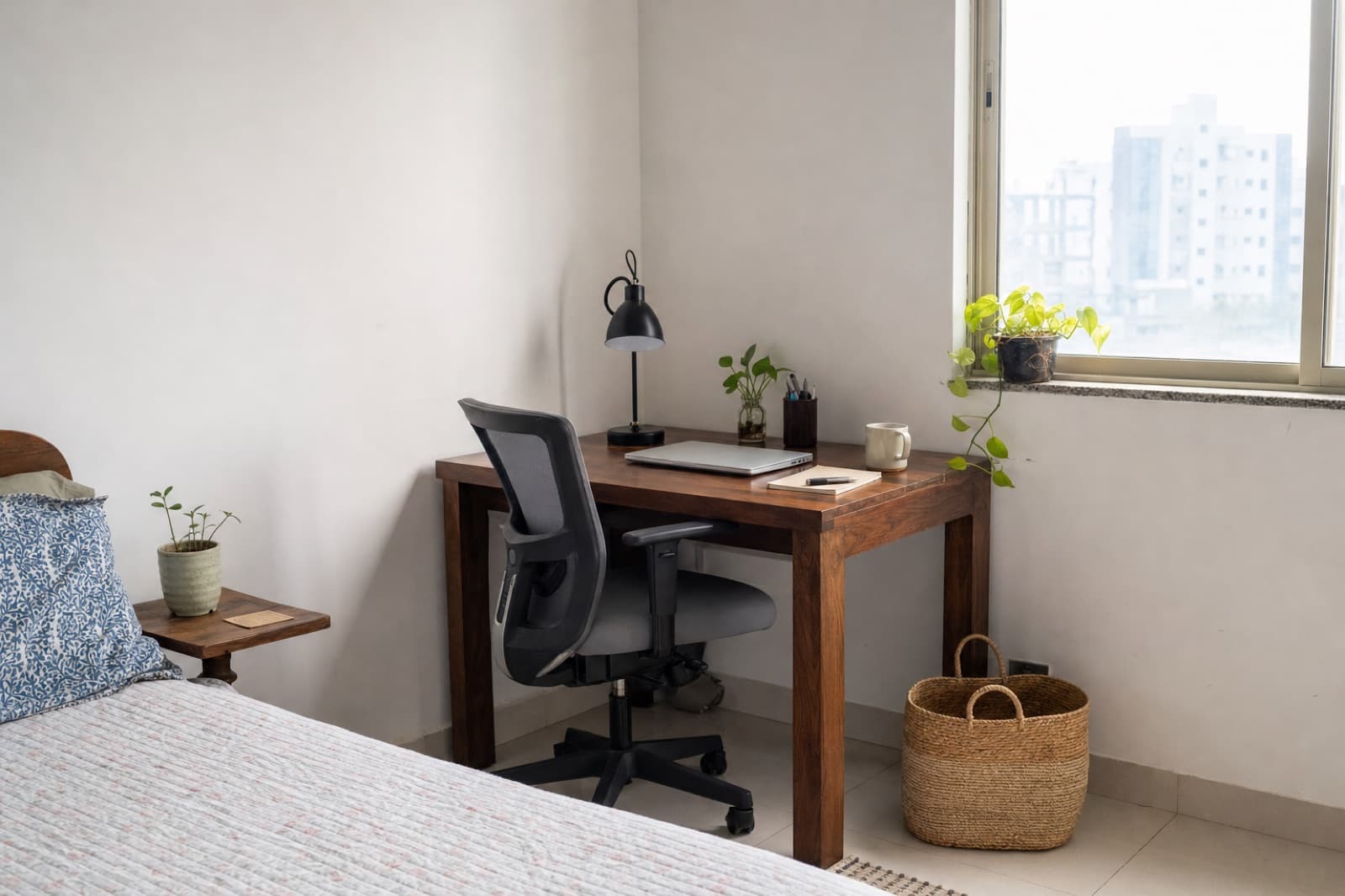
Desk. The north-east or east part of the room is good in both schools for study. Sit facing east or north [1]. If you work from the studio, our post on home office Vastu goes further.
Kitchenette. See the next section on what you can change.
The entrance and the toilet
In a studio both are fixed by the building. Know their readings so you can plan around them, not to worry about them.
Entrance. Both schools prefer the north, north-east and east. The 16-zone school reads a door in the south-west or south-south-west as one to avoid at severity 4 of 5, and in the east-south-east or west-north-west at 3 of 5. The 8-direction school reads the south-west at 4 of 5 and the south or south-east at 2 of 5 [1]. Keep the area inside the door clear and lit: the free entrance steps [1].
Toilet. The 16-zone school rates a toilet in SSW, WNW or ESE as good. The 8-direction school rates north-west and west as good [1]. Keep the door closed and the room ventilated, which are the free toilet steps [1].
A physical point that matters more in a studio than anywhere else: the National Building Code (Part 3, cl. 12.4.4) says a water-closet should not open directly into a kitchen or cooking space [2]. If the bathroom door opens onto the kitchenette counter, that is a building-code issue first, and a lease or purchase question before a Vastu one.
What you can and cannot change
Cannot change, in most studios: the door, the bathroom, the plumbing for the kitchenette sink, and usually the hob position. A tenant can change none of them. Our post on whether Vastu matters for a rented house covers that position in full.
Can change:
- Where the bed sits and which way your head points.
- Where the desk sits and which way you face.
- Where heavy storage goes: along the south and west walls, per Vastu16's furniture guidance [1].
- Whether the north-east corner is cluttered.
- On a portable induction or gas top, which part of the counter you cook on. Vastu16's low-cost kitchen remedy is to move the hob along the counter towards the south-east corner [1].
Physical checks for the kitchenette: IS 3362 sets about six air changes an hour for a family kitchen [3], and in a one-room home cooking fumes reach the bed. The government LPG safety leaflet advises no curtains near the stove and no shelves or cabinets over the hot plate [4]. Both apply to every studio, whatever its zones. Readings for a full kitchen are on our kitchen page.
Checklist
Arrange a studio in 6 steps
- Draw the whole unit on paper, bathroom included, and mark the centre.
- Mark North from the plan, then check it with a phone compass held flat, away from metal.
- Split the room into a 3 by 3 grid. The middle square is the centre: keep it open.
- Bed: south-west square if you can, head to the south or east.
- Desk: north-east or east square, facing east or north.
- Heavy wardrobe or shelves on the south or west wall. Keep the north-east square light.
What is tradition and what is fact
Tradition
- Sleeping area in the south-west, kitchen in the south-east, study in the north-east or east (Vastu16 rule table, from practitioner guidance; the classical texts disagree on the kitchen).
- Head to the south or east while sleeping (practitioner guidance, not scored).
- Centre kept open, with no kitchen or toilet there (both of Vastu16's schools).
Physical fact
- A WC should not open directly into a kitchen or cooking space (NBC 2016 Part 3, cl. 12.4.4).
- A family kitchen needs about six air changes an hour (IS 3362:1977, cl. 4.3.2).
- No curtains near the stove, no shelves over the hot plate (MoPNG LPG safety leaflet).
Where Vastu16 fits
You can check your studio's zones under both schools by drawing the unit's outline and tagging the sleeping area, kitchenette, desk, toilet and door. The check gives each one its zone and reading and flags anything close to a zone line. It does not read bed head direction, furniture or clutter, and it does not check building-code issues such as a WC door opening onto the kitchen.
Questions people ask
Does Vastu apply to a studio apartment?
Practitioners apply the same zones to a studio as to a larger home, measured from the centre of the whole unit. The difference is that each use is placed by part of the room rather than by room. With the door, bathroom and kitchenette fixed, most of your choices are about the bed and the desk.
Where should the bed be in a studio?
Both schools rate the south-west part of the home as good for the main sleeping area. Place the bed in the south-west quarter of the studio if the layout allows, with your head to the south or east. Avoid the north-east corner, which both schools read as one to avoid for a master bedroom.
Where should the kitchenette be?
Both schools rate the south-east as good for cooking, and the 16-zone school also rates south, south-south-east, west and north-west as good. The north-east is one to avoid in both, at severity 4 of 5. If the kitchenette is fixed, move the hob along the counter towards its south-east corner where you can.
Related posts
Does Vastu matter for a rented house? What tenants can do
Tenants cannot move walls. Which Vastu checks are worth doing before you rent, and the free changes you can make in any rented home.
Home office Vastu: desk direction for work from home
Where to put a work-from-home desk as per Vastu, which way to face on calls, and the light, noise and posture basics that matter as much.
Vastu for a 1 RK flat: room, kitchen and what to move
A 1 RK is one room plus a kitchen. Which Vastu checks still apply, what you can move, and how to read a 1 RK plan in five minutes.