 Vastu16
Study table direction as per Vastu, for kids and adults
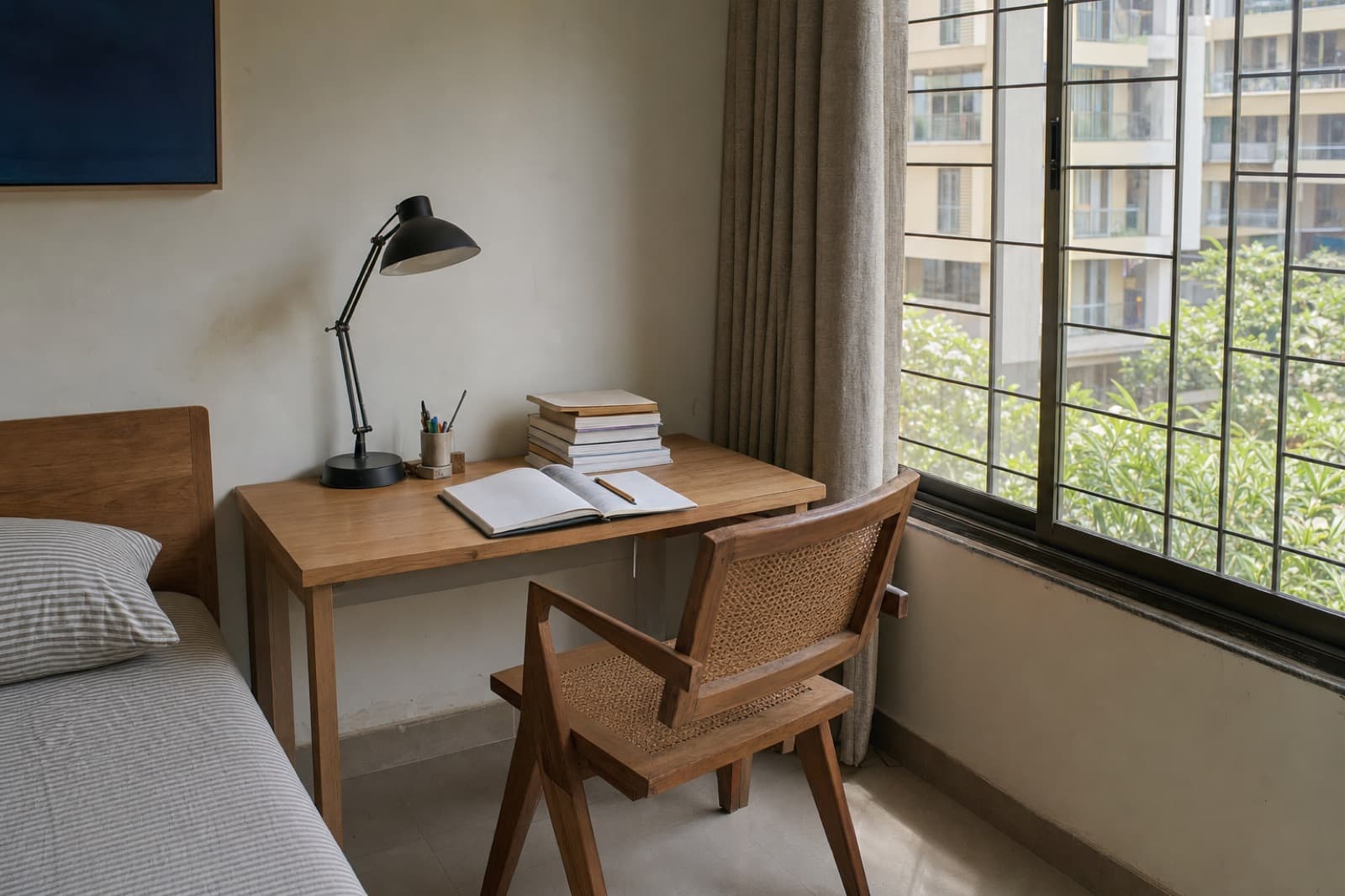
East or north is the way to face at a study table in Vastu16's remedies, with a clear desk and an uncluttered wall in front. That is a free step in any room. The room's zone gets the score, and light from the side matters as much as the facing.
Next: your whole home. Rules are general. Your plan is specific. Upload it and see where each room of your home falls under both schools.
Stand in the middle of your home. Which way is your study? Tap its zone on the wheel.
Good Neutral Avoid North is up. Zones are measured from the centre of the home.
The short answer
Vastu for a study table has two parts. The first is your facing: Vastu16's remedies for a study say to sit facing east or north, and to keep the desk clear and the wall in front of it uncluttered [1]. That costs nothing and works in any room.
The second is the room. The check scores where the study sits in the home, measured from the centre [1]. Both schools prefer a study in the north-east, east or west. The 8-direction school adds the north; the 16-zone school adds the WSW zone and avoids three zones at a low severity of 2 of 5 [1].
Then come the physical checks, which apply whatever the facing: a window to the side rather than in front or behind, a lamp on the side opposite your writing hand, and a screen at a sensible height and distance [2][3][4].
Facing east or north while studying
Study table facing as per Vastu has a clear answer in our table: east or north. The report shows that line as the first remedy for a study in a poor zone [1].
Facing is the cheapest change you can make, which is why it comes first. If the desk is against the north wall, you face north. If it is against the east wall, you face east. A desk in the middle of a room can face either.
If neither wall works because of a window, a door or the bed, two fixes keep you close:
- Turn the desk side-on to the wall so you face east or north across the room.
- Use an L-shaped desk on a corner, with the main work surface facing east or north.
Your facing is not scored by the check, and turning a desk will not change the reading of the room. It is the free step.
Study zones under both schools
Here is how each school reads a study by the side of the home it sits on [1].
| Area of the home | 8-direction school | 16-zone school |
|---|---|---|
| North | Good | NNW, N and NNE neutral |
| North-east | Good | NE good; NNE and ENE neutral |
| East | Good | E good; ENE neutral; ESE avoid, 2 of 5 |
| South-east | Neutral | ESE avoid, 2 of 5; SE and SSE neutral |
| South | Neutral | SSW avoid, 2 of 5; SSE and S neutral |
| South-west | Neutral | WSW good; SSW avoid, 2 of 5; SW neutral |
| West | Good | WSW and W good; WNW avoid, 2 of 5 |
| North-west | Neutral | WNW avoid, 2 of 5; NW and NNW neutral |
The north is where the schools differ most: good in the 8-direction school, neutral in the 16-zone school. The classical text closest to the 16-zone choice is the Vishwakarma Prakash, which places the study between the south-west and the west (2.94-97) [5]. That is the WSW zone.
Vastu for a study table in the bedroom
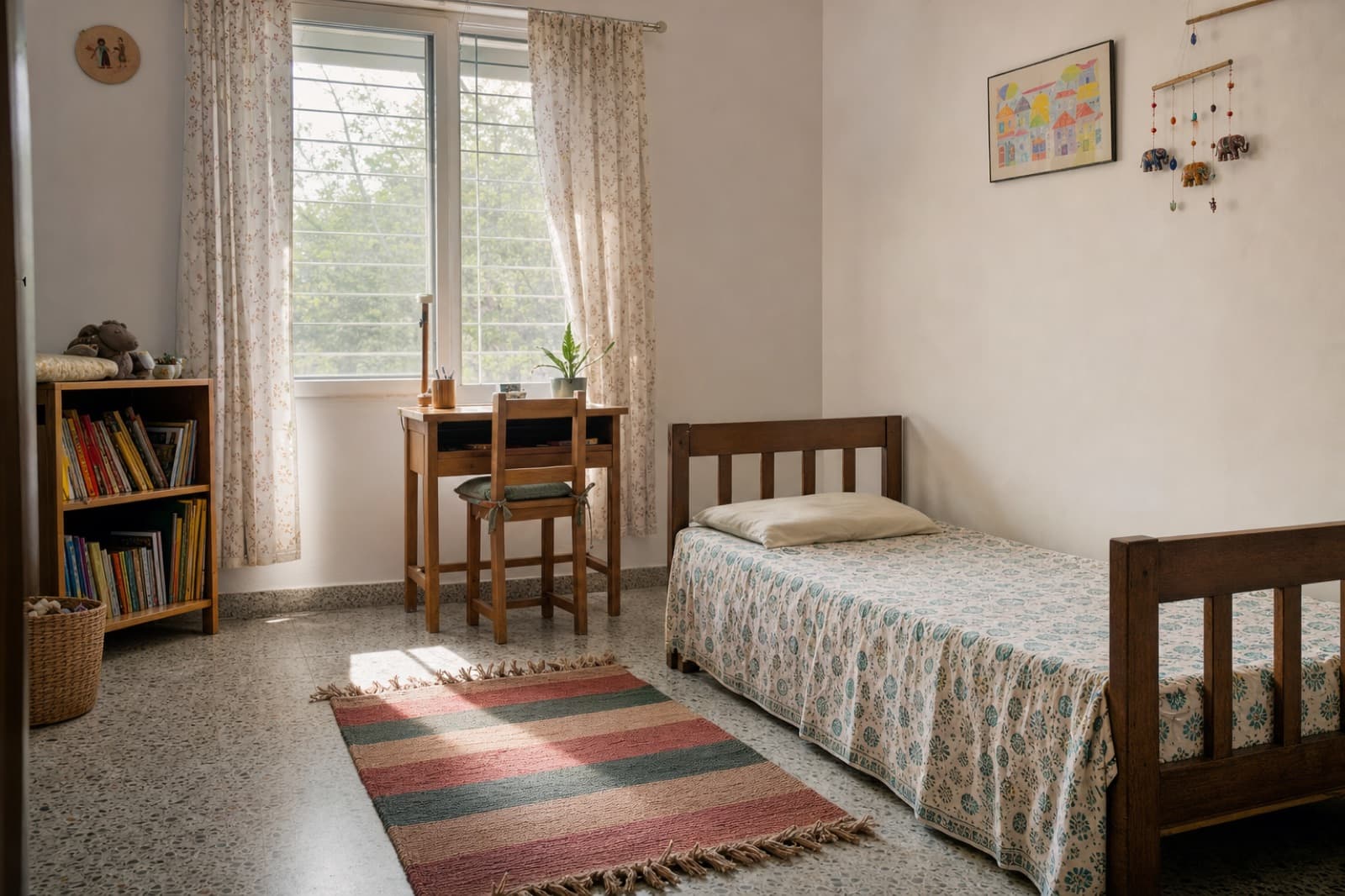
Most children study in their bedroom, and that is fine under both schools. Neither scores a desk inside a bedroom as a problem [1]. Read the bedroom's zone first, on our bedroom direction page, then set the desk.
In a bedroom, the desk usually competes with the bed and the wardrobe for wall space. A workable order:
- Bed first. Head to the south or east. Vastu16's guidance notes the east is often advised for students and children [1].
- Desk second. On the east or north side, so the child faces east or north.
- Wardrobe third. On the south or west wall, where heavy furniture goes in the guidance [1].
In a 3 BHK flat, the third bedroom is often used as a study. If it sits in a study zone, a shared study room for the children can work better than two cramped desks in two bedrooms.
Daylight from the side, glare and posture
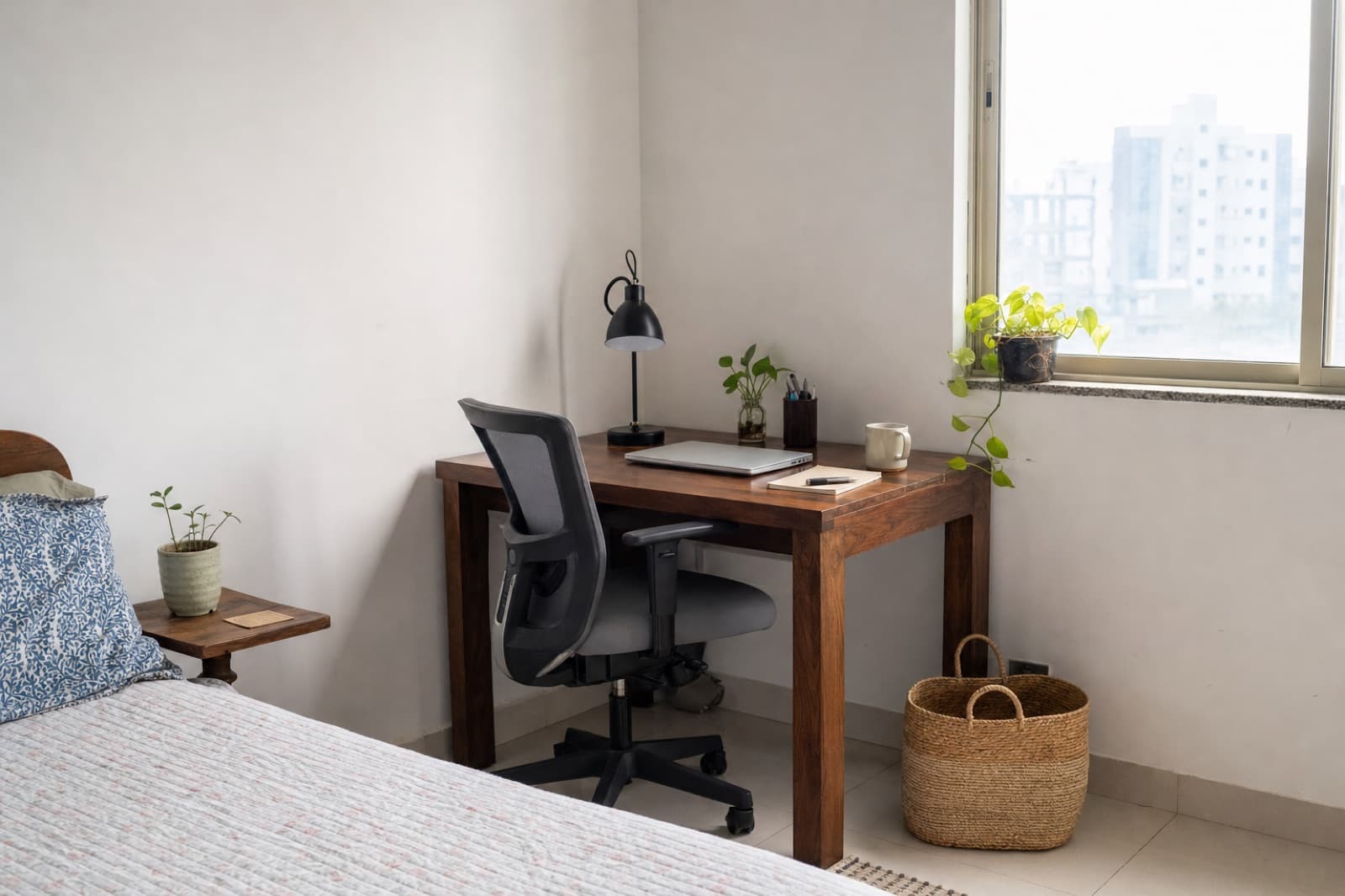
Light decides whether the desk is pleasant to use. OSHA's workstation guidance says to place a screen at right angles to windows, and that a bright window behind a screen causes contrast problems [3]. A window in front of you causes glare; a window behind you lands on the screen. A window to the side is the calm choice.
For paper work, put the lamp on the side opposite your writing hand: on the left for a right-hander, on the right for a left-hander. Then your hand does not throw a shadow on the page [4]. With an east-facing desk and a north window, a right-handed child gets daylight from the left without trying.
For a laptop or monitor, OSHA recommends a viewing distance of 50 to 100 cm, with the top of the screen at or slightly under eye level [2]. If the desk is too high for a child, raise the chair and add a footrest rather than letting the child reach up. OSHA also advises not sitting directly under an air-conditioning vent [3].
Wall colour near the desk counts too; see Vastu colours by direction.
Checklist
Desk setup steps
- Face east or north at the desk [1].
- Clear the wall in front. No shelves of clutter or busy posters at eye level [1].
- Window to the side, never directly in front or behind the screen [3].
- Lamp opposite the writing hand [4].
- Screen 50 to 100 cm away, top at or slightly under eye level [2].
- Feet supported. If you raise the chair to suit the screen, make sure the feet still rest flat, with a footrest for children.
- Look away every so often at something far off to rest the eyes [2].
What is tradition and what is fact
Tradition
- Face east or north while studying; keep the desk clear: Vastu16's remedies, compiled from widely published practice [1].
- Study zones (north-east, east and west in both schools; north in the 8-direction school; WSW in the 16-zone school): Vastu16's rule table [1].
- Study between the south-west and the west: Vishwakarma Prakash 2.94-97 [5].
Physical fact
Where Vastu16 fits
Upload your plan and check your floor plan under both schools: the result shows which rooms sit in a study zone and which do not. It scores the room's zone, not the desk's facing, and it cannot see your windows or measure light. For how the whole home is read, see our guide to Vastu for the home.
Questions people ask
Which direction should I face while studying as per Vastu?
East or north. Vastu16's remedies for a study say to sit facing east or north and to keep the desk clear and the wall in front of it uncluttered. The check scores the zone of the study room, not your facing, so the facing rule is a free step you can take in any room.
Can the study table be in the bedroom?
Yes. Neither school treats a desk in a bedroom as a defect. Read the bedroom's zone from the centre of the home, then face east or north at the desk. Put the desk where the window is to your side, and keep the bed's head to the south or east; Vastu16's guidance notes the east is often advised for students.
Where should the study table be placed?
In a room that sits in a study zone if you have the choice: the north-east, east or west in both schools, the north in the 8-direction school, and WSW in the 16-zone school. Inside the room, set the desk so you face east or north, with the window to one side and the lamp opposite your writing hand.
Related posts
Vastu colours by direction: a wall colour chart
Wall colours commonly suggested for each direction in Vastu, where the colour-direction pairs come from, and how to use them in a real home.
Kids' bedroom Vastu: room, bed and study corner
Which bedroom suits children as per Vastu, where the bed and desk go, and the light and safety checks that matter more for a child's room.
Home office Vastu: desk direction for work from home
Where to put a work-from-home desk as per Vastu, which way to face on calls, and the light, noise and posture basics that matter as much.
Sources
- Vastu16 methodology and rule table (internal)
- OSHA, "Computer Workstations eTool: Workstation Components, Monitors"
- OSHA, "Computer Workstations eTool: Workstation Environment"
- BenQ Knowledge Center, "How to Master Desk Lamp Placement: A Practical Guide"
- Vishwakarma Prakash (Sanskrit with Hindi commentary "Abhaya")