 Vastu16
Toilet seat direction as per Vastu: which way to face
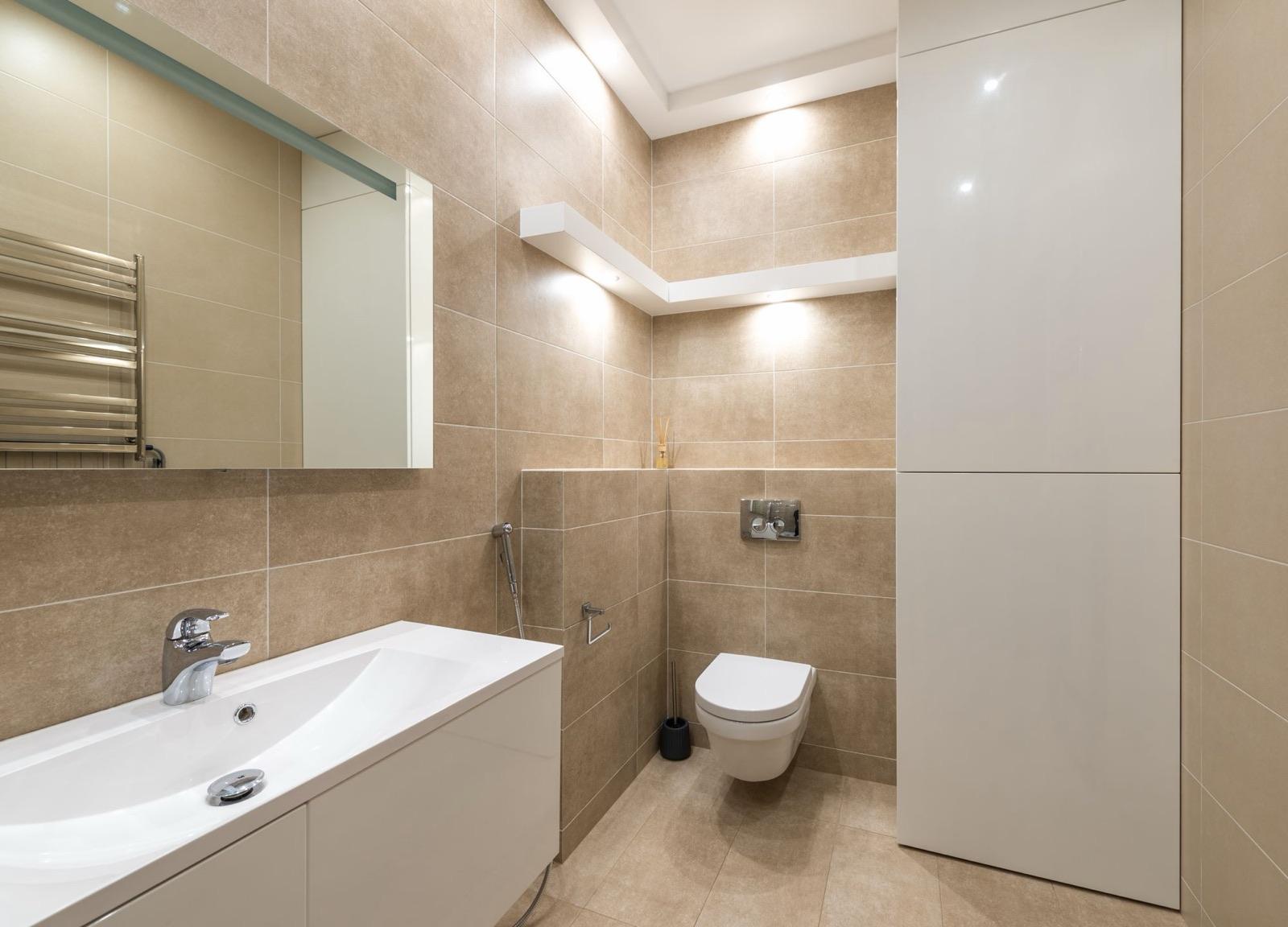
None of the four classical Vastu texts we searched sets a toilet seat direction as per Vastu [2][3][4][5]. The usual advice, a north-south axis so you face north or south while seated, echoes a rule in the Manusmriti, which is a law text, not a Vastu text [8]. Practitioners disagree on east and west, and the location of the toilet matters more.
Next: your whole home. Rules are general. Your plan is specific. Upload it and see where each room of your home falls under both schools.
Stand in the middle of your home. Which way is your toilet? Tap its zone on the wheel.
Good Neutral Avoid North is up. Zones are measured from the centre of the home.
Which direction should the toilet seat face? The short answer
If you are redoing a bathroom and the plumber asks which way the WC should face, here is the plain answer. Where the plumbing gives you a choice, a north-south axis, so that a seated person faces north or south, satisfies most of the guidance we found [8][9][10]. Where the plumbing gives no choice, nothing in Vastu16's method changes, because our check does not score seat direction at all [1].
What our check does score is where the toilet sits around the centre of the home. That is a separate question, covered on our toilet page. Keep the two questions apart: seat direction is about which way you face inside the room, location is about which zone the room is in.
Toilet seat direction versus toilet location
| Question | What it means | Scored by Vastu16? | Main source of the rule |
|---|---|---|---|
| Toilet location | Which zone the toilet sits in, from the home's centre | Yes, under both schools | Vastu16's rule table [1] |
| Seat direction | Which way you face while seated | No | Manusmriti 4.50, and practitioner pages [8][9][10] |
The two can point in different directions. A toilet in a well-rated zone can have a seat facing east, and a toilet in the north-east can have a seat on a perfect north-south axis. The north-east location is the one both schools rate at severity 5, as set out on our page on a toilet in the north-east. Turning the seat does not change that reading.
A word on terms. "Seat facing north" is used loosely. It can mean the direction you face, or the direction the bowl points, which is the opposite. In this post, facing always means the way you face while seated. Our Vastu glossary defines the other terms.
What tradition says about facing while seated
The oldest rule we found is in the Manusmriti, a Dharmashastra text, in Buhler's translation of chapter IV [8].
- 4.50: relieve yourself facing north in the daytime and south at night.
- 4.48: do not face the wind, a fire, the sun, water or cows while doing so.
- 4.51: in shade or darkness, a Brahmana may take any position.
The rule was written for relieving oneself in the open. Modern practitioners carry it indoors, and they do not agree on the details.
- One practitioner writes that no Vastu scripture mentions toilet seat facing, that facing north, south or even west is fine for householders, and that the WC is better aligned to the north-south axis. The same page also advises avoiding facing east while seated, elsewhere advises avoiding a seat that faces west, and in its FAQ says a person should ideally face south [9].
- Another practitioner page says a person should face south or north while seated, and calls east-facing and west-facing seats wrong [10].
So the common ground is a north-south axis. East and west are where the advice splits.
Plumbing limits: soil stacks and slopes
In a flat, the WC connects to the building's soil stack through the floor or the wall. That fixed point limits which way the pan can turn. One practitioner notes that in flats, where the pipelines cannot move, it is often impossible to set the seat as Vastu suggests [9]. A plumber can tell you which orientations the outlet and floor trap allow.
Building rules also apply whichever way the seat faces. The National Building Code's model rules ask for a WC of at least 1.1 square metres, at least one wall open to external air and a window or ventilator of at least 0.3 square metres to a shaft or open space, and no WC opening straight into a kitchen [6]. IS 3362 asks for about six air changes an hour in a WC [7].
If the bathroom has room for the pan on more than one wall, the choice is real. If it does not, spend the effort on ventilation and on the toilet's location instead.
If the seat already faces north or east
Facing north. This matches the Manusmriti's daytime rule and the practitioner page that favours north or south [8][10]. No change is suggested by any source we read.
Facing south. This matches the Manusmriti's night rule and the same practitioner advice [8][10]. No change is needed.
Facing east. Both practitioner pages discourage it [9][10]. Vastu16 does not score it. If you are renovating anyway, ask the plumber what turning the pan to a north-south axis would involve. If you are not renovating, there is no reading in our method that asks you to break a floor for it.
Facing west. The practitioner pages disagree: Anant Vastu calls west fine in one line and advises avoiding it in another, and AppliedVastu calls it wrong [9][10]. Treat it the same way as east.
The free steps for any toilet still apply: door closed, lid down, dry, ventilated, and no leaks [1]. The related posts on a toilet in the north and a toilet in the south-east apply them to specific locations.
Checklist
Before renovation: steps for the WC
- Find the soil stack and floor trap on the plan, or ask the plumber where they are.
- List the orientations the outlet allows.
- If one of them puts you facing north or south while seated, choose it.
- If none does, choose by comfort and ventilation, and stop there.
- Check the toilet's location separately, under both schools.
- Make sure the WC has an external wall, a window or ventilator of at least 0.3 sq m, and an exhaust fan.
What is tradition and what is fact
Where Vastu16 fits
Vastu16 lets you check where your toilets sit under both schools from the floor plan. It reads each toilet's location, gives each school's rating and lists the free steps first. It does not score seat direction, inspect plumbing or tell you which way a pan can turn. More common questions are on our Vastu FAQ page.
Questions people ask
Which direction should a toilet seat face as per Vastu?
No Vastu text we read sets a seat direction. The common modern advice is a north-south axis, so that you face north or south while seated. That echoes the Manusmriti, a law text, which says to face north by day and south at night. Practitioners disagree on east and west. If plumbing allows a choice, a north-south axis satisfies most of them.
Is a north-facing toilet seat bad?
Not under any source we read. If north-facing means you face north while seated, it matches the Manusmriti's daytime rule and the practitioner pages that favour facing north or south. The terms are used loosely, so first check whether someone means the way you face or the way the bowl points. Vastu16 does not score seat direction.
Does the seat direction matter more than the toilet's location?
In Vastu16's method, no. The check scores where the toilet sits around the centre of the home, under both schools, and does not score which way the seat faces. One practitioner we read says the same: for householders the location matters and the seat direction is not much relevant. Fix location questions first, and treat seat direction as a choice at renovation.
Related posts
Toilet in the north: why the two schools disagree
The 16-zone school reads a north toilet at severity 5; the 8-direction school at 2. What each says, why, and what to do about it.
Toilet in the south-east: reading and remedies
The 16-zone school reads a south-east toilet at severity 4; the 8-direction school does not rule on it. What to do with a south-east toilet.
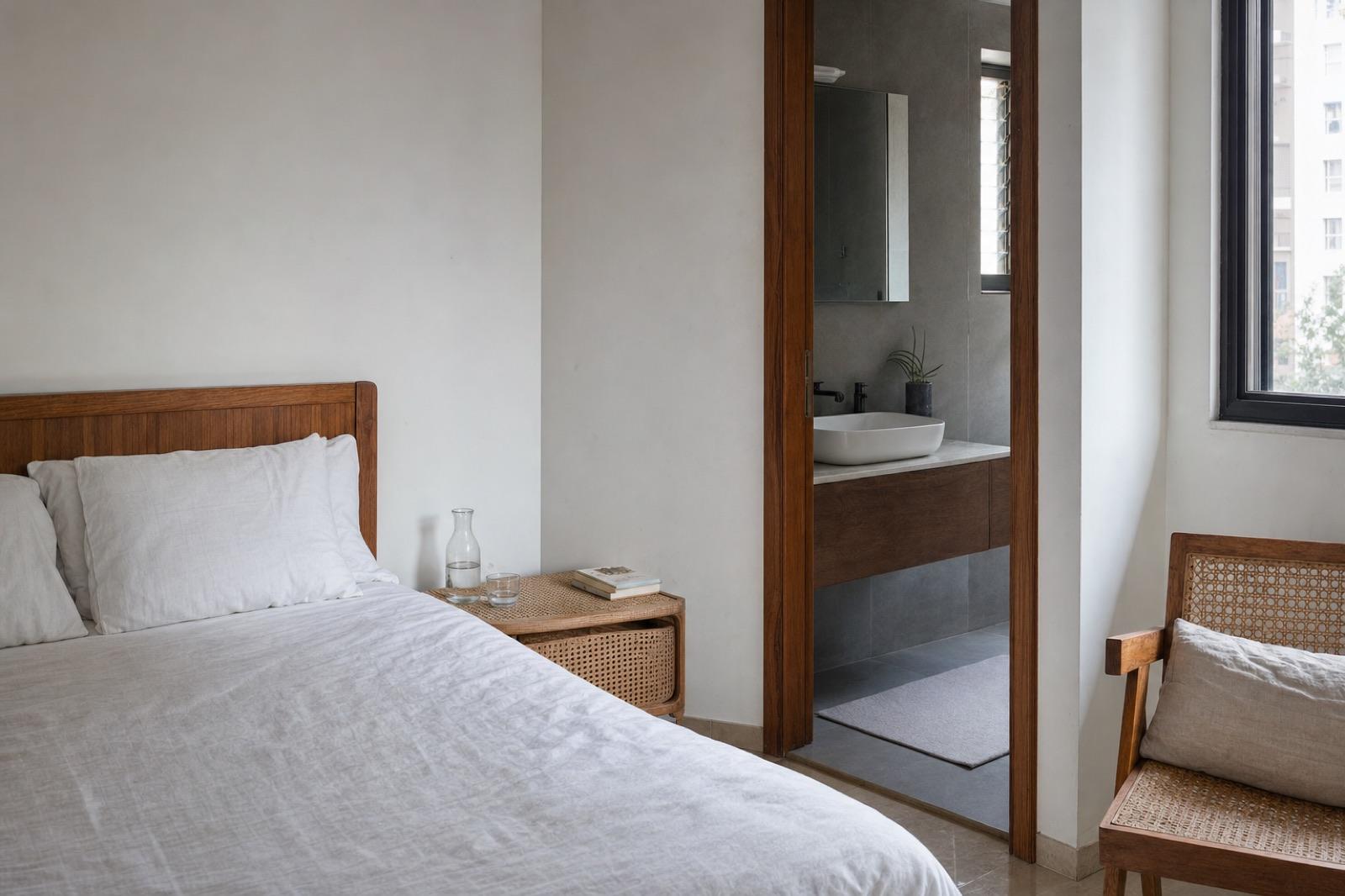
Attached bathroom Vastu: master bedroom and en-suites
Attached bathroom as per Vastu: how both schools read an en-suite off the master bedroom, the shared bed wall, the door, and the ventilation that keeps it dry.
Sources
- Vastu16 methodology and rule table (internal)
- Mayamata (Dagens critical edition and English translation), Vol. II
- Manasara (Acharya translation, 1934)
- Vishwakarma Prakash (Sanskrit with Hindi commentary "Abhaya")
- Brihat Samhita of Varahamihira (chapter on house-building)
- NBC 2016, Volume 1, Part 3 Development Control Rules and General Building Requirements
- IS 3362:1977 Code of practice for natural ventilation of residential buildings (reaffirmed 2004)
- Manusmriti, Chapter IV (Buhler translation)
- Anant Vastu: "Toilet & Bathroom Vastu: Position, Seat Facing Direction & Remedies" (practitioner page)
- AppliedVastu: "Toilet direction as per vastu and Bathroom direction as per vastu" (practitioner page)