 Vastu16
Vastu for homes in the UK and Canada: what to check
2 things change when you check Vastu for a house in the UK or Canada: true North and the sun. In UK cities the compass is within about 1 degree of true North; in Canadian cities it is 10 to 15 degrees off. And the winter sun sits far lower than in India. The plan check is unchanged.
At Vastu16 we read each room's zone under the 16-zone school and the traditional 8-direction school, from a floor plan and North. Our Vastu for US homes page covers American layouts and US declination. This post covers what differs in the UK and Canada: declination, terraced and semi-detached houses, and the low winter sun.
Next: your whole home. Rules are general. Your plan is specific. Upload it and see where each room of your home falls under both schools.
Vastu for a house in the UK or Canada: the short answer
The rules do not change by country. The inputs do: where North really is, and which rooms the old texts never described.
| UK | Canada | India, for comparison | |
|---|---|---|---|
| Compass vs true North, Oct 2026 | 0.7 W to 1.2 E | 13.6 W to 15.4 E | Within about 1.5 degrees in the metros |
| Midday sun, 21 December | About 15 degrees (London) | About 23 degrees (Toronto) | About 47 degrees (Mumbai) |
| Daylight, 21 December | 08:04 to 15:53 (London) | 07:48 to 16:44 (Toronto) | 07:07 to 18:06 (Mumbai) |
| Common house forms | Terraced, semi-detached, detached | Detached, semi, townhouse, condo | Flats, villas, row houses |
Declination values are from the World Magnetic Model via the British Geological Survey calculator [1]; sun values are from the US Naval Observatory [2]. India's values are on our guide to finding North, linked in the steps.
Declination in UK and Canadian cities
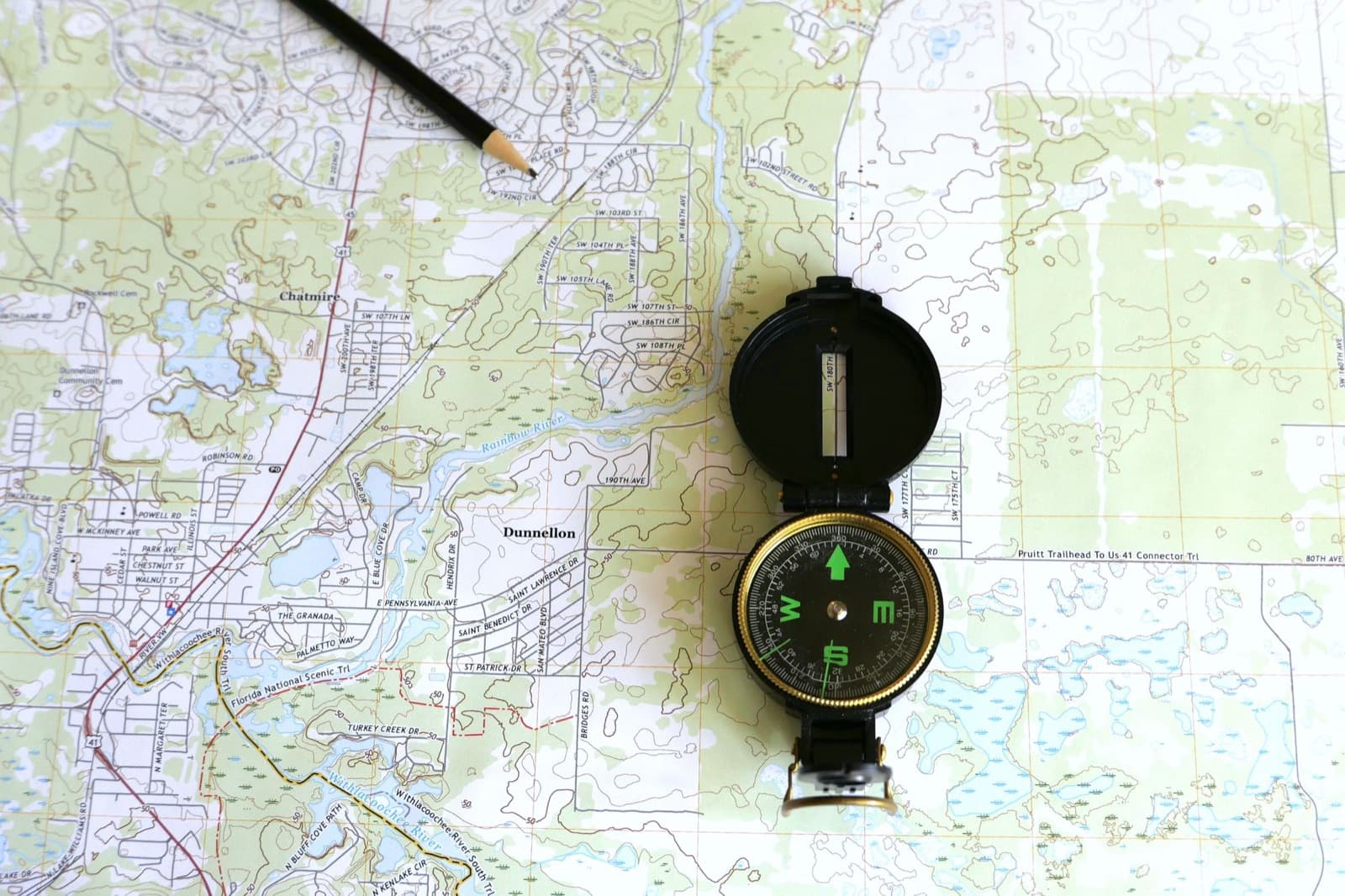
Magnetic declination is the angle between magnetic North, which a compass shows, and true North [3]. Vastu zones are read from true North, so a compass reading needs correcting where declination is large.
| City | Declination, 1 Oct 2026 |
|---|---|
| London | 1.2 degrees east |
| Birmingham | 0.5 degrees east |
| Leicester | 0.8 degrees east |
| Manchester | 0.3 degrees east |
| Glasgow | 0.7 degrees west |
| Toronto | 10.1 degrees west |
| Brampton | 9.9 degrees west |
| Montreal | 13.6 degrees west |
| Calgary | 13.3 degrees east |
| Edmonton | 13.5 degrees east |
| Vancouver | 15.4 degrees east |
Source: World Magnetic Model 2025, British Geological Survey calculator [1]. UK values are drifting east by about 10 to 12 arcminutes a year, so re-check after a few years.
A 16-zone zone is 22.5 degrees wide [6]. A 15 degree error in Vancouver moves a room most of a zone. To correct a compass bearing, add an east declination and subtract a west one: a door reading 0 degrees on the compass in Vancouver faces about 15 degrees true. Our post on magnetic North and true North explains the arithmetic.
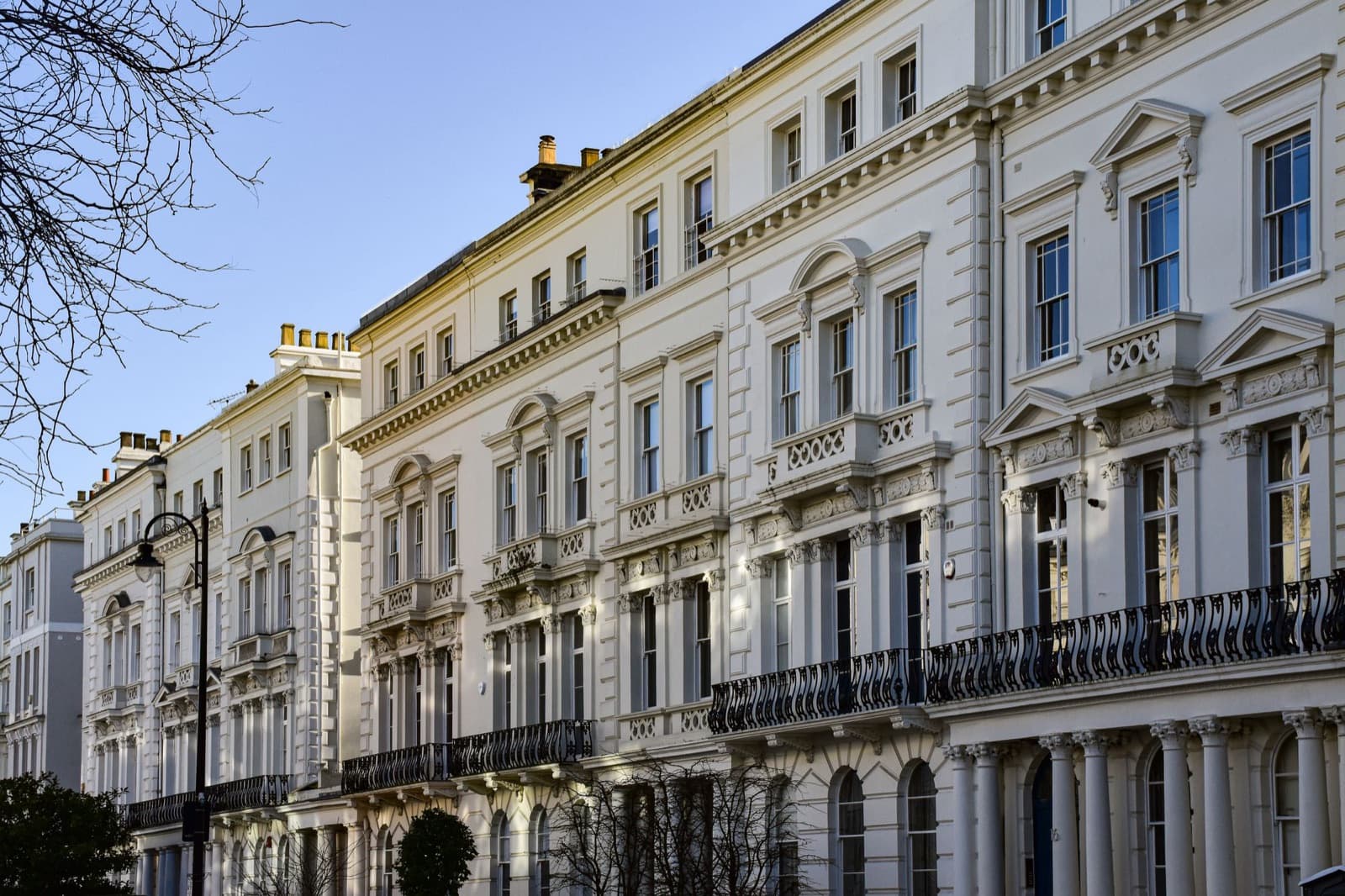
Terraced and semi-detached houses
Terraced houses share walls on both sides, so openings sit at the front and back. Semi-detached houses share one wall. Neither form appears in the classical texts, which describe houses and halls on their own sites.
For a Vastu check, read the house by its own outline, from the inside face of the walls:
- Shared walls do not change the zones. Zones are measured from the centre of each floor's outline [6]. A party wall is just the edge of the outline.
- The facing is set by the street. On a terrace, every house on one side of a straight road faces the same way, so the reading of the front door is shared along the street.
- Rear extensions move the centre. If a kitchen extension makes the ground floor longer, the centre moves back. Outline the plan as built, not the original.
- Each floor is its own plan. Upload the ground floor, the first floor and any loft or basement separately, with the same North. Our US homes page uses the same method for American two-storey houses.
- Rooms with no rule. Utility rooms, porches, conservatories and garages are not in our rule table and are not scored.
Low winter sun at high latitudes
London sits at about 51.5 degrees north and Toronto at about 43.7 degrees, against about 19 degrees for Mumbai. On 21 December the midday sun reaches an altitude of only about 15 degrees in London and 23 degrees in Toronto, against about 47 degrees in Mumbai [2]. London gets under eight hours between sunrise and sunset that day.
The physics points one way: in a cold winter, south-facing glass gathers the low sun. India's National Building Code states the general principle, that the best orientation gives a building the most sun in winter and the least in summer (Vol. 2, Part 8, cl. 3.4.1) [4].
Tradition points another way. The classical texts were written in India, and Vastu16's rule table rates north and east balconies and openings as good [6]. Our table does not adjust for latitude or climate. Where the two pull apart, show both: a south-facing garden room may be the warmest room in a Toronto winter and still carry no Vastu rating at all.
Checklist
How to run the check
Steps, at home:
- Look up declination for your city in the table, or on the BGS calculator for your postcode.
- Find true North on a satellite map. Match your house and its neighbours; our guide on how to find North for Vastu covers the map match. A terrace makes this easy: the street gives you the angle.
- Confirm with a compass, corrected for declination. Our online Vastu compass shows magnetic North, so add or subtract your city's value. Move away from radiators and appliances; NOAA notes local anomalies of 3 to 4 degrees are not uncommon [5].
- Outline the ground floor as built, including any extension.
- Tag the rooms: main door, kitchen, every bathroom and WC, bedrooms, living room.
- Read shared walls as the edge of the outline, as in a row house.
- Repeat for each floor with the same North.
If you want a Vastu consultant to review the result, the review works from the plan and North, so the consultant does not need to be in the UK or Canada. The post on whether Vastu works in the USA covers the same question for North America more broadly.
What is tradition and what is fact
Tradition
- Zone ratings, including north and east openings rated good: Vastu16's rule table, 16-zone and 8-direction schools.
- The classical texts describe Indian houses and halls; terraced and semi-detached forms are not in them.
Physical fact
- Declination values for UK and Canadian cities: World Magnetic Model 2025, BGS calculator, 1 Oct 2026.
- Midday sun about 15 degrees in London and 23 degrees in Toronto on 21 December: US Naval Observatory.
- Local magnetic anomalies of 3 to 4 degrees are not uncommon: NOAA NCEI.
- Best orientation maximises winter sun and minimises summer sun: NBC 2016, Vol. 2, Part 8, cl. 3.4.1.
Where Vastu16 fits
The free tool lets you check your UK or Canadian floor plan under both schools: upload each floor, match the house on the satellite map, and see each room's zone and reading. Its phone compass reading is magnetic and not yet corrected for declination, so in Canada use the map match. It does not adjust the rules for climate.
Questions people ask
Does Vastu apply in the UK?
The same rules can be read for a UK home: a Vastu check needs only the floor plan and true North. The classical texts were written in India and never described a British terraced house, so some rooms are not covered. Vastu16 applies one rule table everywhere and does not adjust it for latitude or climate.
How do I check Vastu for a house in Canada?
Upload each floor's plan, tag the rooms, and set North from a satellite map match, which uses true North. Do not rely on a phone compass alone. Magnetic North in Canadian cities differs from true North by about 10 to 15 degrees, for example 10.1 degrees west in Toronto and 15.4 degrees east in Vancouver.
Does declination matter in the UK?
Very little at present. In October 2026 the World Magnetic Model puts declination at 1.2 degrees east in London, 0.3 degrees east in Manchester and 0.7 degrees west in Glasgow. That is small next to a 16-zone zone of 22.5 degrees. Local magnetic disturbance from steel and appliances is the bigger risk.
Related posts
Does Vastu work in the USA? Homes, North and layouts
Indian families in the US ask whether Vastu applies abroad. What changes (declination, layouts, garages), what does not, and how to check.
Magnetic North vs true North in Vastu: which to use
A compass points to magnetic North, maps to true North. The difference by city, when it changes a Vastu zone, and which one Vastu16 uses.
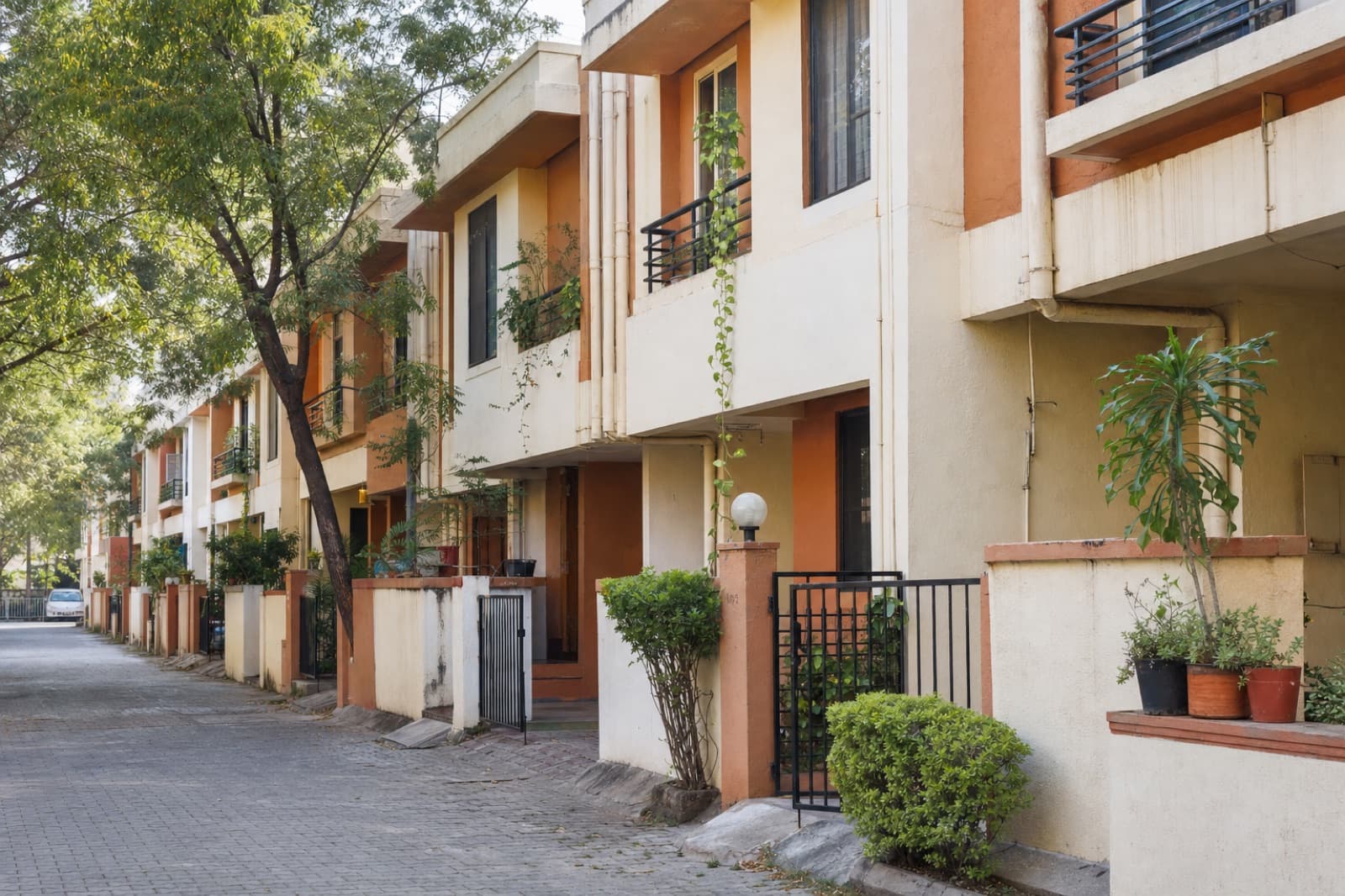
Row house Vastu: shared walls and one open front
A row house has one or two open sides and shared side walls. How Vastu reads facing, light and room placement in a narrow plot.
Sources
- BGS World Magnetic Model 2025 Calculator and web service
- US Naval Observatory Astronomical Applications API (v4.0.1): "Complete Sun and Moon Data for One Day" and "Celestial Navigation Data for Assumed Position and Time"
- NOAA NCEI Geomagnetism FAQ
- National Building Code of India 2016, Volume 2, Part 8 Building Services, Section 1 Lighting and Natural Ventilation
- WMM Accuracy, Limitations, and Error Model
- Vastu16 methodology and rule table (internal)