 Vastu16
Does Vastu affect health? Light, air and damp first
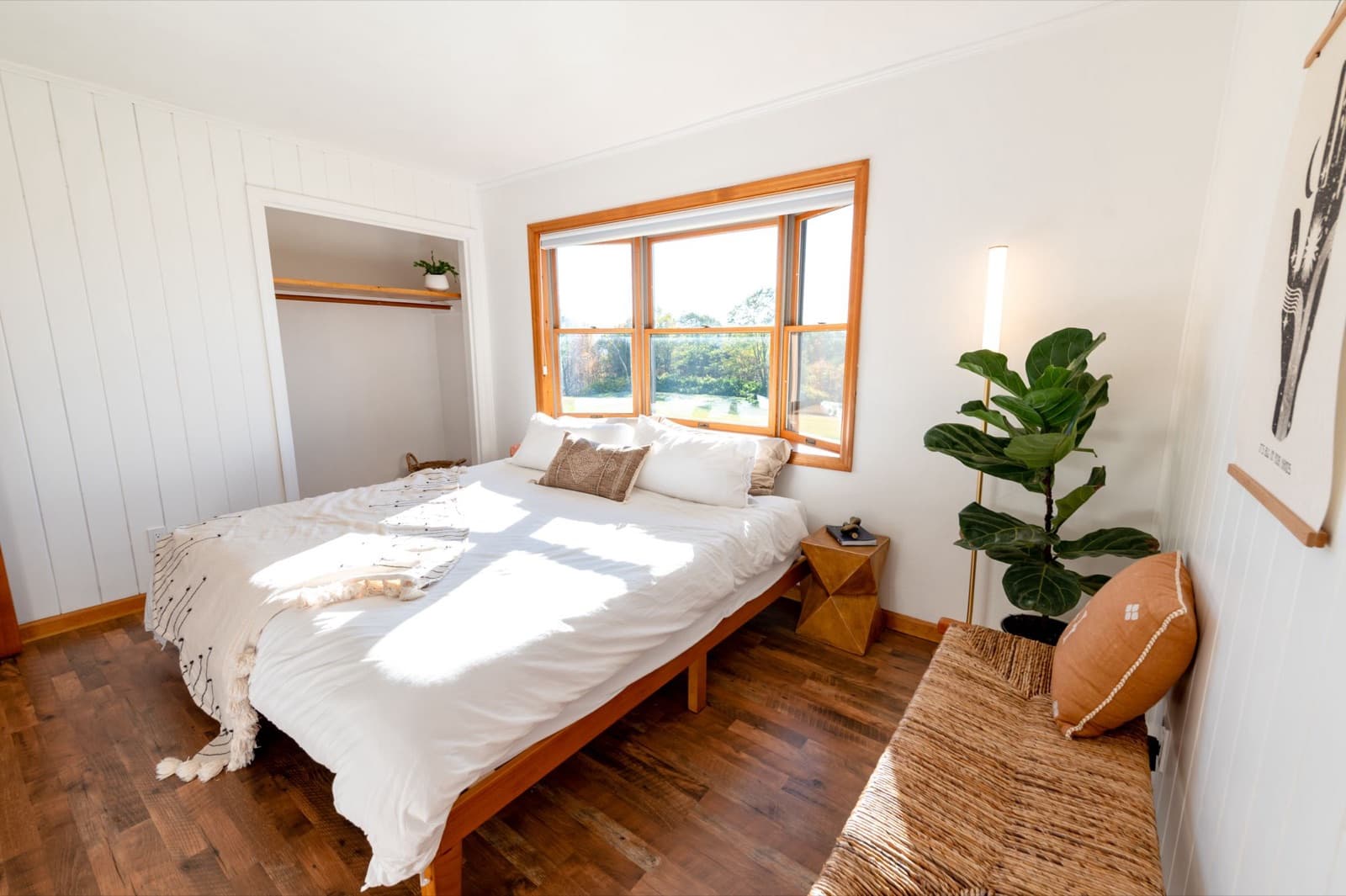
Zero opened studies find that the direction of a room affects health. So, does Vastu affect health? The evidence says no for direction itself. What does affect health at home is physical and measurable: daylight, fresh air, damp, cooking smoke and noise. Those are the things to check, and several overlap with traditional advice.
If a relative has pinned a family illness on the house, this page is meant to help you answer calmly. At Vastu16 we read floor plans under two Vastu schools, and we keep a clear line between what a tradition says and what can be measured. That line matters most when health is involved.
If you have symptoms, see a doctor. A home check is not medical advice.
Next: your whole home. Rules are general. Your plan is specific. Upload it and see where each room of your home falls under both schools.
Does Vastu affect health? The short answer
Vastu is a set of traditional rules about where rooms and doors should sit. Some classical texts attach outcomes to faults in a layout. The Vishwakarma Prakash, for example, lists faults that follow from clutter at the centre of the house (ch. 7, vv.108-110) [7]. None of these outcomes were measured by the texts or by anyone since, as far as our reading goes.
The astrophysicist Jayant Narlikar described contemporary Vastu as a collection of unproven claims linking inhabitants' fortunes to room positions [1]. That is expert opinion, not a trial. Still, no trial points the other way either.
So the honest answer has two halves. Direction alone has no shown effect on health. A home's light, air, damp and noise do, and you can check each of them in a single visit.
What the evidence says about direction and health
We looked for measured studies. The only one we found that put instruments in Vastu homes is Karani (2019): five villas in Dubai, temperature and humidity loggers in four corners for two weeks in summer and two in winter [2]. The north-east corner was coolest and the south-east warmest in every house. There was no comparison group of ordinary homes and no statistics, and the author credited comfort to passive design, such as shading and north windows, not to any special mechanism.
A 2010 review by Fazeli and Goodarzi argues that Vastu rules carry an environmental logic, but it measures nothing and relies mostly on popular books [13]. A survey of 200 Udaipur households, run in 2014 and published in 2020, found 91.5% had heard of Vastu [3]. That tells us how common the belief is. It says nothing about outcomes.
Put plainly: belief in Vastu is widespread, and the measured evidence on health is close to empty. Our longer look at the evidence is in does Vastu really work.
What does affect health at home
Damp and mould. The WHO guideline on indoor dampness says persistent damp and microbial growth on surfaces should be avoided or kept to a minimum, because they may cause respiratory symptoms, allergies and asthma [4]. Damp comes from rain, plumbing leaks, condensation, and steam from kitchens and baths.
Fresh air. The Indian standard on natural ventilation, IS 3362, asks for about three air changes an hour in living rooms and bedrooms, and about six in a family kitchen, toilet or bathroom [5]. Smoke and gases from stoves collect in the kitchen and can drift into other rooms (cl. 3.3) [5]. The WHO's household fuel guideline also stresses venting combustion [8].
Daylight. The National Building Code 2016 sets the openable window area as a share of floor area: one-tenth in hot-dry climates, one-sixth in warm-humid, one-eighth in temperate and composite, and one-twelfth in cold [6]. Any part of a room more than 7.5 m from a window is not counted as lit (Note 2) [6].
Noise. WHO guidance recommends road traffic noise under 53 dB averaged over day and night, and under 45 dB at night [11].
Where tradition and building science point the same way
Some traditional advice lines up with physical comfort, even if the stated reasons differ.
| Advice | Where it comes from | Physical side |
|---|---|---|
| Balconies and openings to the north and east | Both schools in Vastu16's rule table rate north and east balconies as good [12] | The NBC's solar rule is most sun in winter and least in summer [14]; for latitudes under 23.5 degrees N, ENS 2024 weights north walls lightest for heat gain (0.659) and east and west heaviest (1.155, 1.156) [9] |
| Kitchen in the south-east | Brihat Samhita 53.118 [15]; the Manasara (XXXVI.26) disagrees and puts kitchens north or north-east [16] | Placement matters less for health than a window and exhaust; the NBC asks for 25% more window area in a kitchen [6] |
| Toilets kept clean, dry and closed | Vastu16's remedy list for toilets [12] | Every WC needs one wall open to outside air and a window or ventilator to a shaft or open space, and must not open straight into a kitchen (NBC cl. 12.4) [6] |
| Keep the centre of the home open | Vishwakarma Prakash 7.108-110 [7] | IS 3362 asks that partitions inside a home not block the path of air between openings (cl. 6.2) [5] |
Which zone a toilet sits in, under each school, is covered on our toilet placement page. For health, the part that counts is that the toilet vents to outside air and stays dry.
Checklist
A home health check you can do in one visit
Take a phone torch and 15 minutes. The checks are the same for a flat you own, a flat you rent, or one you are thinking of buying.
- Daylight. Stand in the living room and each bedroom at midday with the lights off. Can you read a page comfortably near the middle of the room?
- Cross ventilation. Does each main room have openings on two walls, ideally opposite or diagonal? IS 3362 notes that two windows do better than one even on a single outside wall [5].
- Kitchen exhaust. Is there a window near the hob and an exhaust fan or chimney that vents outside? If you smell gas, open doors and windows, shut the regulator, and do not use a switch or a flame [10].
- Toilet ventilation. Does every toilet have a window or a working exhaust to outside air?
- Damp and mould. Look at ceiling corners, behind wardrobes, under sinks and around window frames. Note stains, peeling paint, a musty smell.
- Night noise. Visit once after 10 pm. Note traffic, generators or lifts near the bedrooms.
- Symptoms. If anyone at home has breathing trouble, allergies or poor sleep, take it to a doctor and mention what you found.
What is tradition and what is fact
Tradition
- Kitchen in the south-east: Brihat Samhita 53.118 [15]. The Manasara (XXXVI.26) [16] puts kitchens in the north or north-east instead.
- Keep the centre of the house clear: Vishwakarma Prakash 7.108-110.
- North and east openings rated good: both schools in Vastu16's rule table (our method, not outside evidence).
Physical fact
- Persistent damp and mould may cause respiratory symptoms, allergies and asthma: WHO 2009 dampness guideline [4].
- Bedrooms need about three air changes an hour, kitchens and toilets about six: IS 3362 [5].
- Minimum openable window area by climate, and the 7.5 m daylight limit: NBC 2016 Part 3, cl. 20.1.2 [6].
- Road traffic noise guidance: under 53 dB Lden, under 45 dB at night: WHO [11].
- No measured study shows direction changes health: our reading of the sources in [1], [2], [13].
Where Vastu16 fits
If your family wants a Vastu reading anyway, you can check your floor plan under both schools for free. The tool marks the zone of each room and shows where the 16-zone and 8-direction schools agree or differ. It does not measure damp, air, light or noise, and it makes no health claim. Our rule table and method are public, and our answers to common Vastu questions cover the basics.
Questions people ask
Can Vastu affect health?
No opened study shows that the compass direction of a room changes anyone's health. The only measured Vastu study we found covered five Dubai homes with no comparison group. What a home can affect is daylight, fresh air, damp and noise, and those are worth checking whatever your view of Vastu.
Can a bad home affect health?
Yes, through physical conditions. The WHO links persistent damp and mould to respiratory symptoms, allergies and asthma, and sets night-time road traffic noise guidance under 45 dB. Smoke and gas from cooking need venting. None of these depend on which direction a room faces.
What should I check in my home for better health?
Check five things: daylight in the main rooms, windows on two sides for cross ventilation, an exhaust or window in the kitchen and every toilet, damp patches or mould on walls and ceilings, and night-time noise in the bedrooms. If you have symptoms, see a doctor first.
Related posts
Does Vastu really work? What evidence exists
An honest look at Vastu: what has been studied, what has not, where it overlaps with light and ventilation, and how to use it sensibly.
Cross ventilation in a flat: how to check it on the plan
Cross ventilation needs openings on two sides. How to spot it on a floor plan, what the building code asks for, and where Vastu agrees.
Is Vastu scientific? Climate, light and the claims
Some Vastu rules match sun path and ventilation; others make claims no study supports. A rule-by-rule look at what is physics and what is tradition.
Sources
- Narlikar (2003), astronomy, pseudoscience and rational thinking
- Karani (2019), comfort in Vaastushastra homes in Dubai
- Chawla (2020), survey of Vastu application in Udaipur homes
- WHO Guidelines for Indoor Air Quality: Dampness and Mould (2009)
- IS 3362:1977 Code of practice for natural ventilation of residential buildings (reaffirmed 2004)
- NBC 2016, Volume 1, Part 3 Development Control Rules and General Building Requirements
- Vishwakarma Prakash (Sanskrit with Hindi commentary "Abhaya")
- WHO Guidelines for Indoor Air Quality: Household Fuel Combustion (2014), executive summary
- Eco-Niwas Samhita (ENS) 2024, Energy Conservation and Sustainable Building Code (residential)
- LPG installation Safety Tips (consumer guidance)
- WHO Compendium on health and environment, Chapter 11: Environmental noise (2022 update)
- Vastu16 methodology and rule table (internal)
- Fazeli and Goodarzi (2010), Vastu as environmental belief system
- National Building Code of India 2016, Volume 2, Part 8 Building Services, Section 1 Lighting and Natural Ventilation
- Brihat Samhita of Varahamihira (chapter on house-building)
- Manasara (Acharya translation, 1934)