 Vastu16
Vastu for apartments in Dubai: towers, units and checks

About 2.2 degrees: that is how far magnetic North sits from true North in Dubai, so a Vastu reading is done the same way as in India. What changes is the building. In a tower, the exact unit, its mirror twin and the side its balcony faces matter more than the word "Vastu" in a listing.
Next: your whole home. Rules are general. Your plan is specific. Upload it and see where each room of your home falls under both schools.
Vastu compliant apartments in Dubai: the short answer
Families looking for Vastu compliant apartments in Dubai usually meet the label in a listing or a sales call. Treat it as a description, not a certificate. In the Dubai law and Dubai Land Department pages we opened, we found no definition or certification of the term [5][6][8].
What you can check is the unit itself. Vastu16 reads four things first: the zone of the main door, the kitchen, the master bedroom and the toilets. Each reading comes from the published rule table under two schools, the 16-zone school and the traditional 8-direction school [1].
Three features of Dubai towers decide most results. Tower orientation varies from plot to plot. Units on opposite sides of a core are often mirror images. Developer brochures often show a typical floor, not your unit. This post is the buyer checklist. If you want a consultant in the city, our Dubai page for NRI buyers covers that.
Declination and North in the UAE
A compass points to magnetic North. Vastu zones are drawn from true North. The angle between them is the declination [2].
| City | Declination (WMM2025, Oct 2026) | What it means on a plan |
|---|---|---|
| Dubai | 2.2 degrees east | Magnetic North is slightly east of true North |
| Abu Dhabi | 2.2 degrees east | Same as Dubai |
| Mumbai | 0 degrees | No practical difference |
| Delhi | 1.3 degrees east | Small |
Vastu16 keeps these values from the NOAA World Magnetic Model calculator, checked on 2 October 2026 [2]. A 16-zone slice is 22.5 degrees wide and an 8-direction slice is 45 degrees [1]. So 2.2 degrees moves only a door or room that sits near a zone edge.
The bigger risk is the phone. NOAA notes that local declination anomalies of 3 or 4 degrees, caused by the ground itself, are not uncommon [3]. Inside a concrete tower, a satellite view or the site plan is usually a better North than a phone. Our guide to finding North for a Vastu check walks through each method.
Tower orientation and mirror units
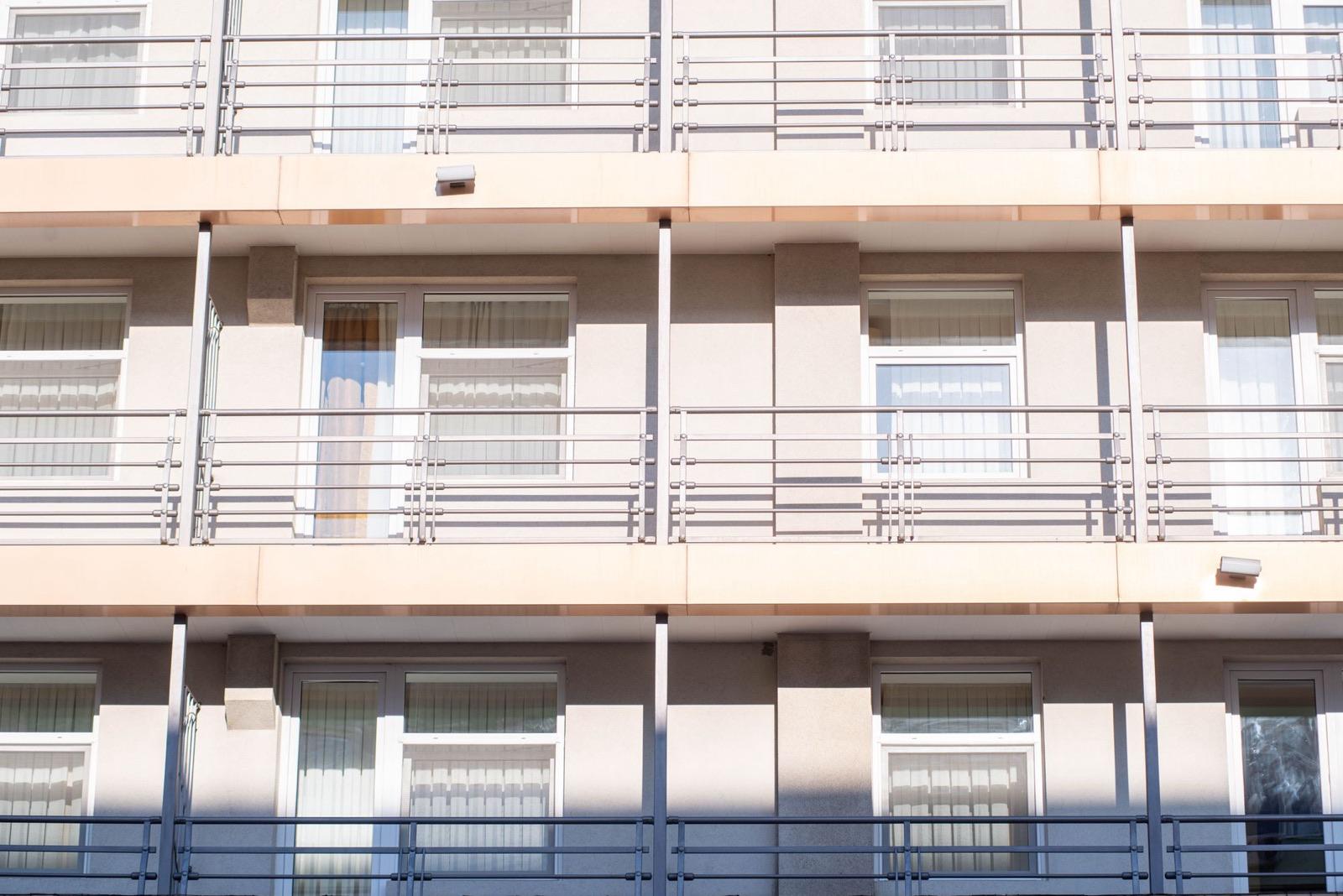
In a tower, the plot and the master plan set the building's angle. Two towers by the same developer, a few hundred metres apart, can face different ways. Never assume a unit type reads the same in every tower.
Mirror units are the second trap. Many floors place two units as mirror images on either side of a lift core. The plan type has the same name and the same rooms, but the kitchen that sits in the south-east in one unit can sit in the south-west in its twin. In Vastu16's table, a kitchen in the south-east is good in both schools, while a kitchen in the south-west is one to avoid, severity 3 of 5 in both [1].
To read the tower's angle, open a satellite view, reset it to a flat, north-up view, and compare the long faces of the building with the North arrow [4]. Then find your unit on the floor plate. Ask for the unit number on the plan before you compare prices.
Reading developer floor plans
Dubai developers usually publish typical floor plates and unit-type plans. Neither is always your unit. Three checks keep the reading honest.
First, look for a North arrow. Many marketing plans have none. Without one, the plan cannot be zoned, and any "Vastu" claim on it has no fixed reference.
Second, check whether the plan is mirrored for your unit. If the brochure shows one plan for both sides of the core, read both versions.
Third, ask what the approved drawings show. Under Dubai Law No. 8 of 2007, a developer opening a project escrow account submits initial architectural designs and engineering plans approved by the competent entities and the master developer (Art. 6) [5]. At final registration, the Dubai Land Department FAQ says the developer provides approved engineering drawings from the planning authority [6]. We did not find a Dubai Land Department page describing how a buyer obtains a unit plan, so ask the developer directly [6].
Heat is a separate reading. In Karani's 2019 study of five Dubai villas, the overall trend was that the north-east corner was the coolest and the south-east the warmest, with no comparison group [7]. Residents who used the south-east and south-west rooms relied on air-conditioning [7].
Questions for the developer or agent
Plain questions get plain answers. Ask these in writing so the reply is on record.
- Which unit number is this plan for, and is it mirrored on the other side of the core?
- Can you share the plan with a North arrow, or the site plan showing the tower's angle?
- Which way does the main door face, and which way do the balcony and the largest windows face?
- When you say "Vastu compliant", which rooms do you mean, in which zones, and under which school?
- For off-plan units: is the sale registered on the Oqood interim register? The Dubai Land Department lists a 2 percent fee each for seller and buyer and a 90-day registration window [8].
Balcony side matters for comfort in a hot climate. In IIT Bombay's modelling of a fully glazed building in Indian cities, glass facing south-west gave the highest annual cooling load in warm climates [9]. Dubai was not modelled, so read that as a direction to check, not a number. The National Building Code also asks for sun-breakers to cut off direct sunlight everywhere except the cold climate zone [10].
This is general information, not financial or tax advice.
Checklist
Your Dubai unit checklist
Take this list to a sales office or a viewing.
- Get the plan for your exact unit number, with a North arrow.
- Confirm the tower's angle from a satellite view reset to north-up.
- Ask whether the unit is mirrored, and read both versions.
- Mark the main door, kitchen, master bedroom and toilets.
- Note which side the balcony and the largest glass face, and whether they are shaded.
- Run each candidate unit through the check, then compare them side by side.
Indian buyers weighing a home in India as well will find the parallel steps in our post on Vastu checks for NRIs buying a flat in India.
What is tradition and what is fact
Tradition
- Zone readings for the door, kitchen, bedrooms and toilets under the 16-zone and traditional 8-direction schools: Vastu16's rule table [1].
- Zones drawn from North: both schools in the rule table use compass zones from true North [1].
Physical fact
- Dubai declination about 2.2 degrees east: NOAA World Magnetic Model 2025 [2].
- Local magnetic anomalies of 3 to 4 degrees are not uncommon: NOAA WMM accuracy page [3].
- North-east coolest, south-east warmest in five Dubai villas, no control group: Karani 2019 [7].
- South-west glass gave the highest cooling load in modelled warm Indian cities: IIT Bombay and MNRE handbook [9].
- Approved initial designs submitted to open an escrow account: Dubai Law No. 8 of 2007, Art. 6 [5].
- Oqood fees and 90-day window: Dubai Land Department service page [8].
Where Vastu16 fits
Vastu16 reads the zones of the rooms you tag on a floor plan under both schools, after you confirm North. You can check a Dubai floor plan under both schools, use the mirror buttons if you only have one plan for two units, and then compare up to eight units side by side. The check does not verify a developer's claims, registration or title. Those stay with the developer, the Dubai Land Department and your lawyer.
Questions people ask
What does Vastu compliant mean in Dubai listings?
The label is a seller's description, not a certificate. We found no regulator document in our source library that defines or certifies the label in Dubai or India. Ask which rooms the seller means, in which zones, and under which school, then check the unit's own floor plan against North yourself.
How do I check the Vastu of a Dubai apartment?
Get the floor plan for your exact unit, not the tower brochure. Find true North from the site plan or a satellite map, mark the main door, kitchen, bedrooms and toilets, and read their zones under both schools. Compare the mirrored unit across the core before you choose.
Does Vastu change in the UAE?
The rules are the same; only the North reading needs care. Magnetic North in Dubai is about 2.2 degrees east of true North (NOAA, World Magnetic Model 2025). That is small next to a 22.5 degree zone, but it matters for a door near a zone edge.
Related posts
Buying a flat in India from abroad: a remote Vastu check
Buying in India while living abroad? How to check a flat's Vastu remotely: plans, North by satellite, video walkthroughs and sending it home.
Off-plan property in Dubai: checking Vastu before handover
Off plan property Vastu in Dubai: get the right unit plan, check orientation from the site plan, and what Dubai's off-plan rules mean for changes.
Mirror image flats: why the same plan reads differently
Mirror image flat Vastu: two units with the same plan, flipped, can get different readings. How mirroring moves rooms between zones, and how to check.


Sources
- Vastu16 methodology and rule table (internal)
- World Magnetic Model (WMM) product page
- WMM Accuracy, Limitations, and Error Model
- Google Earth Help: Explore the Earth on your computer
- Dubai Law No. (8) of 2007 Concerning Escrow Accounts for Real Estate Development in the Emirate of Dubai
- Dubai Land Department: Frequently Asked Questions
- Karani (2019), comfort in Vaastushastra homes in Dubai
- Dubai Land Department: Request to register the initial sale (Oqood)
- Handbook on Energy Conscious Buildings (Nayak and Prajapati, IIT Bombay and Solar Energy Centre, MNRE, pilot edition May 2006)
- National Building Code of India 2016, Volume 2, Part 8 Building Services, Section 1 Lighting and Natural Ventilation