Vastu16
Two main doors in Vastu: combined flats and villas
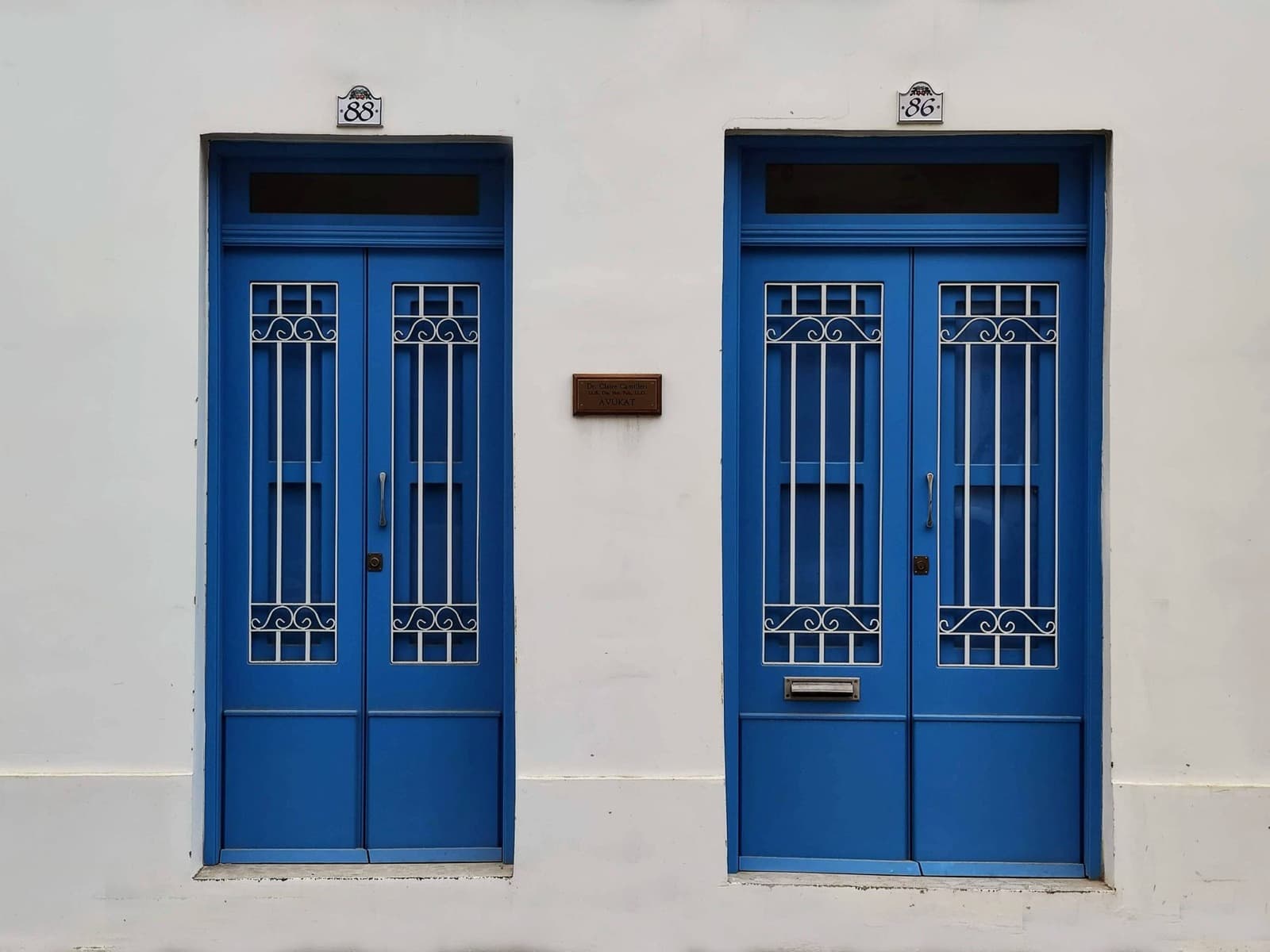
One door is read as the main door, even when a home has two. With two main doors, a practical rule treats the door you use every day as the main one. Read both doors' zones from the centre of the whole home, keep the better-placed one as the main entrance, and use the other as a service door.
Two entrances are common in combined flats, where two neighbouring units are joined into one home, and in villas with a front door and a side or kitchen door. At Vastu16 we read every door you tag, under two schools. This post covers how to decide which door is the main one, how each is read, and what changes when two flats become one.
Next: your whole home. Rules are general. Your plan is specific. Upload it and see where each room of your home falls under both schools.
Stand in the middle of your home. Which way is your main entrance? Tap its zone on the wheel.
Good Neutral Avoid North is up. Zones are measured from the centre of the home.
Two main doors in Vastu: the short answer
- The main door is the one in daily use. Where the household enters and leaves, and where guests arrive.
- Both doors get read. Each is read by its zone from the centre of the whole home, under both schools [1].
- Keep the better one as main. If one door sits in a zone both schools read as good and the other does not, make the good one the main entrance.
- The other door becomes secondary. Use it for service, or keep it closed.
The classical texts we opened describe one entrance for a house. The Mayamata places the house door on named squares on each side, and none opposite Brahma's central square (30.44-49; Dagens notes 27.45 refers to the house entrance) [2]. The Brihat Samhita gives a result for a door at each of 32 positions (53.71-75) [4]. None of them sets a rule for choosing between two doors.
Which door is the main door
Use behaviour, not drawings, to decide. Ask four questions:
- Which door does the family use to leave in the morning and come back at night?
- Which door do guests ring at?
- Which door has the nameplate and receives deliveries?
- Which door opens into the living area rather than a kitchen, utility or corridor?
If one door wins on most of these, it is the main door. Our main door placement page shows how each school reads it.
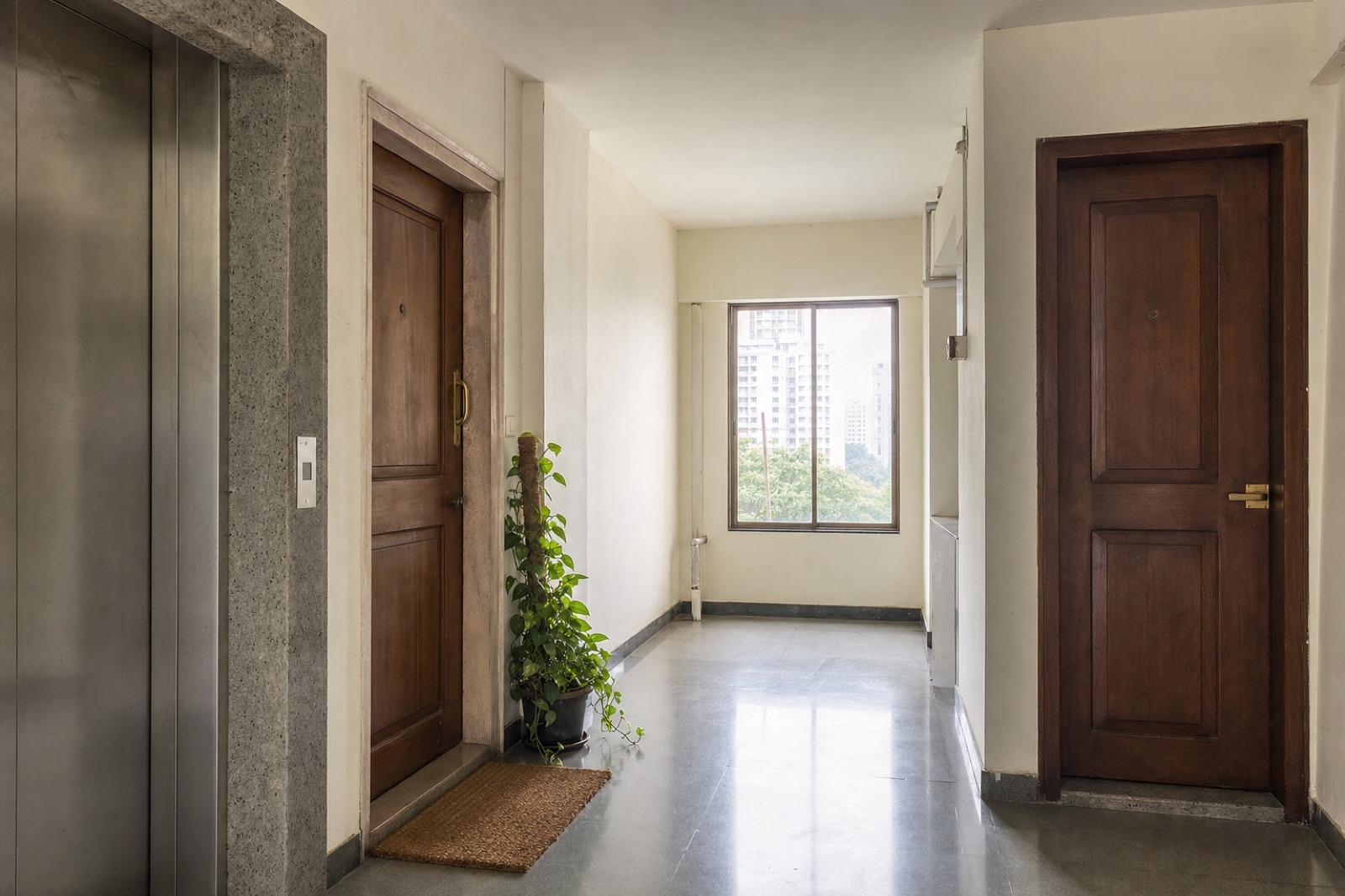
If the answers split evenly, you have a choice to make, and the zone readings can help make it. In combined flats that is common, because both original doors open off the same lobby. The lobby and corridor side of a flat entrance is covered in Vastu for a flat entrance.
Reading both doors
Each door is read by its zone from the centre of the home. In Vastu16's rule table, a main door in the north, north-east or east reads as good in both schools [1]. A door in the south-west reads as one to avoid, severity 4 of 5, in both [1]. The page on a main door in the south-west covers that case.
| Door 1 zone | Door 2 zone | Suggested main door | Reason from the rule table [1] |
|---|---|---|---|
| E (good in both) | S (avoid 2 in the 8-direction school) | Door 1 | Good in both schools |
| N (good in both) | NE (good in both) | Either | Both good; choose by daily use |
| SW (avoid 4 in both) | W (neutral in both) | Door 2 | Neutral is better than avoid 4 |
| ESE (avoid 3 in the 16-zone school) | WNW (avoid 3 in the 16-zone school) | Either | Same severity; choose by use, apply the free steps to both |
The secondary door still gets the entrance remedies if you use it at all. Vastu16's free steps for any entrance are to keep it clean, bright and clear of shoes and bins, and to make sure the door opens fully without sticking or creaking [1]. The texts list door faults such as a self-opening or creaking leaf (Mayamata 30.33-43; Vishwakarma Prakash 7.103-107) [2][5].
Combined flats: one home or two
Two joined flats become one home with one outline. That has a consequence people miss: the centre moves. Each original flat had its own centre; the combined home has a new one, roughly between the two. Every zone is measured from that new point, so a door that sat in the north-east of the original flat might sit in the north or east of the combined home. Finding the centre of an odd outline is covered in how to find the centre of a house.
So re-read everything, not just the doors:
- Draw one boundary around both flats, including the opening between them.
- Find the new centre. Check what sits there now; a toilet at the centre reads as avoid, 5 of 5, in both schools [1].
- Re-read the kitchens and toilets. A combined flat often has two kitchens and three or four toilets. Each gets its own zone.
A combined flat is often the size of a 4 BHK; room allocation for that size is in Vastu for a 4 BHK flat.
Villas with a front door and a side door
Villas and independent houses often have a front door, a side door to the kitchen or garden, and sometimes a back door. The same method applies. The front door used daily is the main door; the others are secondary. Our villa and independent house page covers the rest of the reading for homes open on all sides.
The Brihat Samhita says the dwelling should be on one's right on entering the courtyard (53.70) [4]. The Manasara names four door quarters for houses of all castes, one on each side (XXXVI.66-67) [3]. Neither text says a house should have only one door, and neither says what to do about a second one. A side door is a normal part of a villa.
Closing a second door
You do not have to seal a second door. These options run from free to bigger:
- Decide and stick to it (free). Use the better-zoned door as the main entrance every day. Put the nameplate and doorbell there.
- Make the other a service door (free). Use it for staff, deliveries or the kitchen. Keep it clean and clear.
- Keep it closed (free). Lock it and keep it closed from the inside, but keep the key handy.
- Change it at renovation (bigger). If the flats are being joined now, ask whether one door can shift along its wall into a better zone, the plan-stage step in Vastu16's remedy list [1].
Before sealing any door permanently, ask your housing society and a fire safety adviser. A second way out of a large home has practical value.
Checklist
Steps for a home with two doors
- Decide the door used daily. Use the four questions on behaviour.
- Draw one outline around the whole home and find its centre.
- Read both door zones under both schools.
- Keep the better one as main. Nameplate, bell and daily use go there.
- Treat the other as secondary. Service use, or kept closed.
- Apply the free entrance steps to whichever doors you use.
What is tradition and what is fact
Tradition
- One house entrance on named squares, none opposite the centre: Mayamata 30.44-49 and 27.45 [2].
- A result for a door at each of 32 positions; the dwelling on the right on entering: Brihat Samhita 53.70-75 [4].
- Four door quarters, one per side: Manasara XXXVI.66-67 [3].
- Door faults such as a creaking or self-opening leaf: Mayamata 30.33-43; Vishwakarma Prakash 7.103-107 [2][5].
Physical fact
- Joining two flats changes the outline, so the geometric centre moves and every bearing from it changes.
- Reading each door by its zone from the centre is Vastu16's method, not outside evidence [1].
Where Vastu16 fits
You can check a combined flat or villa plan under both schools. Draw the outline around the whole home, tag both doors as entrances, and each one gets its own reading under the 16-zone and 8-direction schools. The tool does not decide which door you use; that is your call, and the readings help you make it.
Questions people ask
Can a house have two main doors as per Vastu?
A house can have two entrances, but the reading treats one as the main door. The classical texts we read describe and judge one house entrance; they do not give a rule for choosing between two. A practical rule is that the main door is the one the household uses every day. Vastu16 reads each tagged door by its own zone.
Which door counts as the main door?
The door you use daily to enter and leave, where guests arrive and post is delivered. A door kept locked, or used only for staff or service, is a secondary door. If both are used equally, read both zones and choose the one in the better zone as the main door from now on.
How is a combined flat read?
As one home with one outline. Draw the boundary around both flats together, find the new centre, and read every room and both doors from it. The centre moves when two flats join, so a door that read well in the original flat can fall in a different zone in the combined one.
Related posts
Vastu for a flat entrance: corridor, lift lobby and door
Vastu for a flat entrance off a shared corridor: which zone counts, doors facing doors, lift lobbies, and what a buyer can change.
Vastu for a 4 BHK flat: rooms, zones and who sleeps where
A 4 BHK gives you choices. How to assign four bedrooms, a study and two or three toilets by zone, with a worked 4 BHK example.
How to find the centre of a house for Vastu
Every zone is measured from the centre. How to find it on a rectangular plan, an L-shaped flat and an irregular plot, step by step.