Vastu16
Moving into a new home: a first-week Vastu checklist
Five days cover it: entrance and kitchen on day one, bedrooms on day two, the prayer space and study on day three, then storage and a walk-round for damp and defects. Every step here is free or costs only the furniture you are moving anyway. Leave anything structural for later, once you have lived in the home.
These Vastu tips for new house moves are about order, not about buying anything. The zones each room should sit in are on our Vastu for home page. This post is the sequence: what to place first, what to check before the boxes are unpacked, and what to leave for later. Every reading comes from the rule table Vastu16 publishes.
Next: your whole home. Rules are general. Your plan is specific. Upload it and see where each room of your home falls under both schools.
Vastu tips for a new house, before the furniture arrives
The day before you move, or the morning of, do three things with the empty home.
- Find North and the centre. Use the plan's North arrow and check it with a phone compass held flat, away from metal. Mark the centre of the home on the plan.
- Read the fixed rooms. You cannot move the door, kitchen or toilets, so learn their zones now. Run the free Vastu check on the floor plan if you have it.
- Mark three areas on the floor plan. The south-west part of the home (heavy furniture and the main bed), the north-east part (keep light and open), and the centre (keep free of heavy furniture). These come from Vastu16's furniture guidance [1].
A movers' crew places furniture fast. A few minutes with the plan beforehand means the wardrobe goes against the right wall the first time.
Bedrooms and beds
Place beds on day two, after the kitchen works.
- Head direction. Place the bed so the head points south or east. North is the one direction most guidance advises against; west is acceptable [1]. Not scored; the reasoning is in our bed direction guide.
- Main bedroom. Both schools rate the south-west, south and west of the home as good for the master bedroom. The 8-direction school reads a master bedroom in the north-east as one to avoid at severity 3 of 5; the 16-zone school reads it at 2 of 5 [1].
- Wardrobes. Heavy wardrobes go towards the south-west part of the room [1].
- Beams and mirrors. Avoid a bed directly under a beam, and avoid a mirror that faces the bed [1].
- Under the bed. Keep it free of stored clutter [1].
Kitchen setup
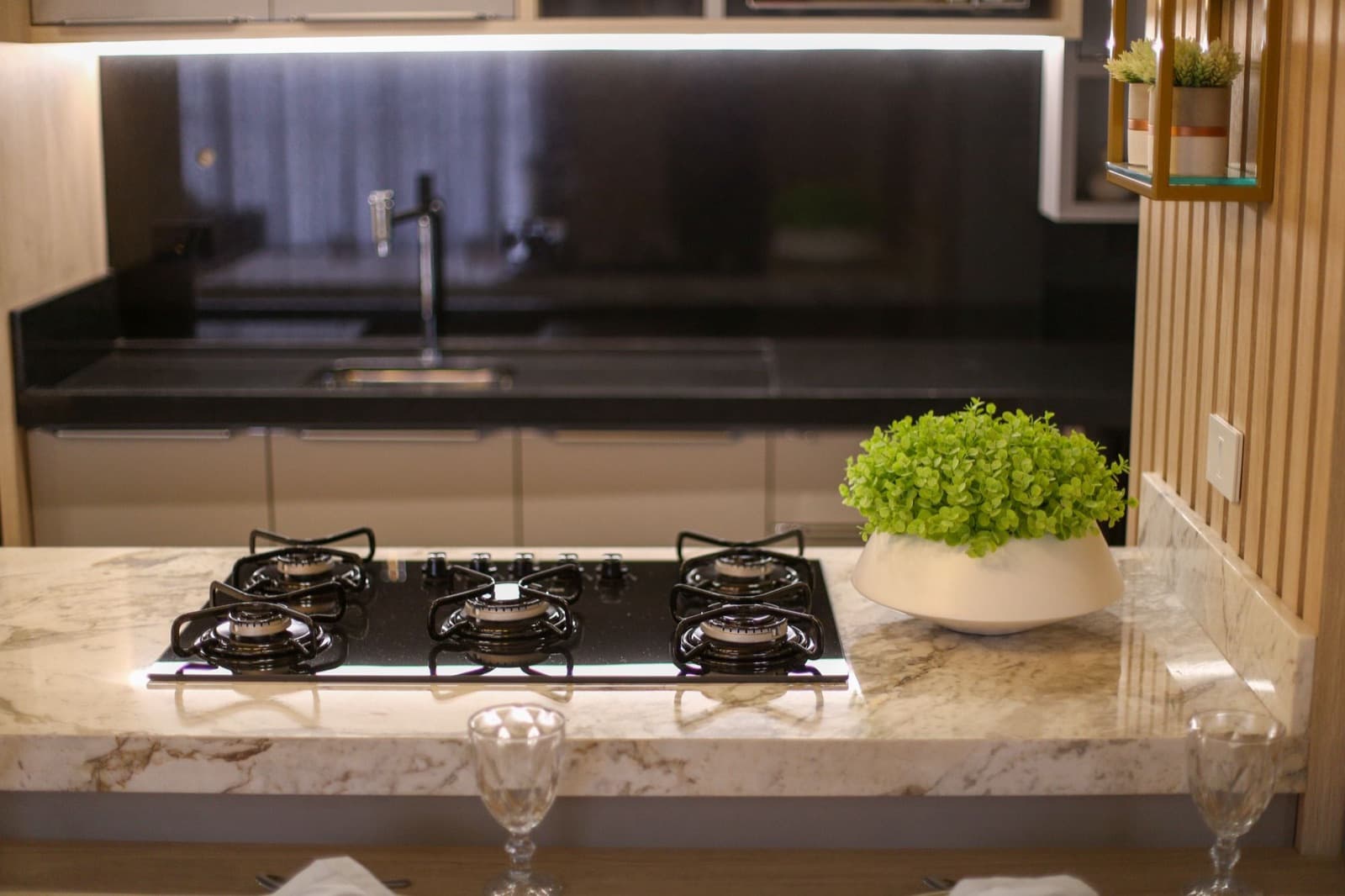
Set the kitchen up on day one, because you will cook on day one.
Gas first. The government LPG safety leaflet says to keep the cylinder upright, keep the stove on a platform higher than the cylinder, never put the cylinder in a closed compartment or a pit, and keep curtains away from windows near the stove. It also advises having the installation checked every two years [2]. If you smell gas: open the doors and windows, shut the regulator, light no flame and use no electrical switch [2].
Then the layout. Two free steps from Vastu16's kitchen remedies [1]:
- Keep the stove and the sink as far apart on the counter as the layout allows.
- Stand facing east while cooking where the counter allows.
If the hob is portable, place it towards the south-east corner of the counter. Readings for every kitchen zone are on our kitchen page, and our post on kitchen sink and stove placement covers the counter in detail.
Entrance and lights
The entrance is the first thing to set up and the cheapest to get right. Vastu16's free entrance steps are to keep it clean, bright and clear of shoes, bins and stored items, and to make sure the door opens fully without sticking or creaking. The low-cost steps are a bright light outside and inside the door, and repairing a worn door or threshold [1].
On move-in day that means the shoe rack goes beside the door, not in front of it, and the packing boxes are stacked anywhere but the entrance.
Lights matter beyond the door. Light the staircase on every flight if the home has one, and keep the space under the stairs clear [1]. Walk the home after dark on the first night and note any corner that needs a lamp.
What to leave for later
Some changes are better made after a few weeks in the home.
- Swapping rooms. If the master bedroom sits in a zone you dislike, live with the layout first. Vastu16's bigger remedy is to swap it with another bedroom [1], which is easier once you know how the rooms are used.
- Structural changes. Moving a toilet or a kitchen is a renovation, not a first-week task.
- Defects. Note them in writing in week one. Under the RERA Act (s. 14(3)), structural defects or defects in workmanship, quality or services raised with the promoter within five years of possession are to be rectified free of charge within thirty days, or compensated [4]. That applies to a home bought from the builder of a registered project.
This is general information, not legal advice. Check your state's RERA rules or ask a lawyer.
Damp. Look for damp patches, bubbling paint or black spots, especially on walls next to bathrooms. The WHO guidelines on dampness and mould say persistent damp and mould on interior surfaces should be avoided or minimised [3]. A new flat with a plumbing leak is a defect to report.
If you are renting rather than buying, our post on whether Vastu matters for a rented house covers what a tenant can change.
Checklist
The first-week plan
| Day | Room | Do this | Cost |
|---|---|---|---|
| Before | Whole home | Find North, mark the centre, run the check on the plan | Free |
| 1 | Entrance | Clear the entry, check the door opens fully, light inside and out | Free or low |
| 1 | Kitchen | Gas safety checks, stove and sink apart, face east to cook | Free |
| 2 | Bedrooms | Bed head south or east, wardrobe south-west, no bed under a beam | Free |
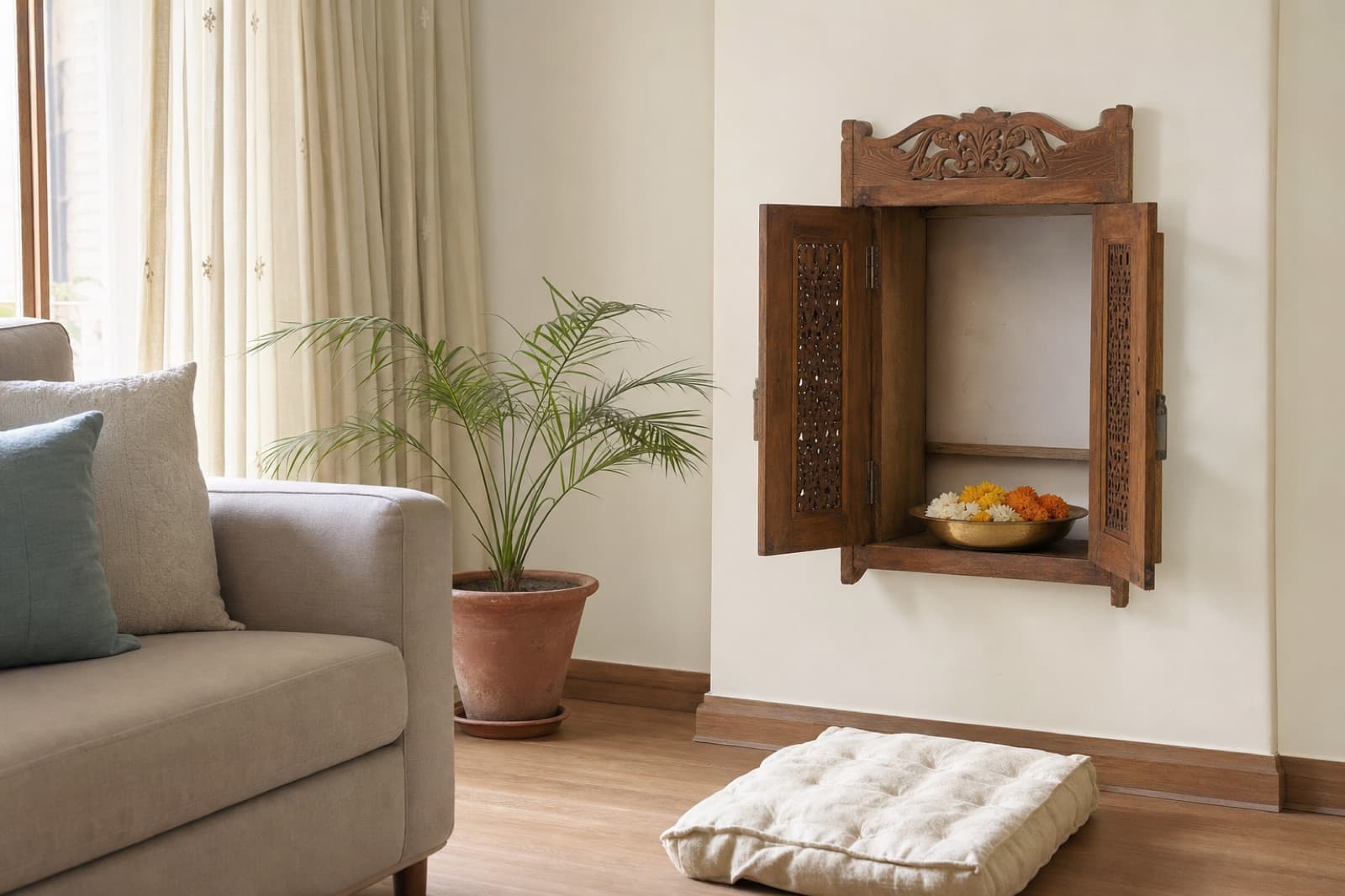
| 3 | Prayer space | North-east, east or north; off a toilet wall | Free |
| 3 | Study | Desk facing east or north | Free |
| 4 | Storage | Heavy items on south and west walls; north-east kept light | Free |
| 5 | Walk-round | Note damp, leaks and defects in writing | Free |
For day three, our pooja room page has the zone readings, and our post on a pooja unit in a flat covers a mandir in the living room.
What is tradition and what is fact
Tradition
- Heavy furniture to the south and west; north-east light and open; centre free of heavy furniture (practitioner guidance in Vastu16's furniture list).
- Bed head to the south or east, not north (practitioner guidance, not scored).
- Prayer space in the north-east or east (both of Vastu16's schools).
Physical fact
- Cylinder upright, stove higher than the cylinder, installation checked every two years (MoPNG LPG safety leaflet).
- Persistent damp and mould should be avoided or minimised (WHO, 2009).
- Defects raised within five years of possession are to be fixed free within thirty days (RERA Act s. 14(3)).
Where Vastu16 fits
Before the boxes arrive, you can check your new home's floor plan under both schools. It gives every tagged room its zone, its reading in each school and the free and low-cost steps in order. It does not place furniture for you, check gas fittings or find defects. Vastu16 does not prescribe ceremonies, and it does not use astrology or birth charts.
Questions people ask
What should I do first in a new house as per Vastu?
Start with the entrance and the kitchen on day one. Clear the entrance, make sure the door opens fully, and light it inside and out. In the kitchen, do the gas safety checks first, then keep the stove and sink apart. Find North and mark the centre of the home before the furniture arrives.
How should I arrange furniture in a new home?
Practitioners advise heavy furniture, wardrobes and storage along the south and west walls, the north-east of the home and each room kept light and open, and the centre free of heavy furniture. Place beds with the head to the south or east. None of these steps needs a purchase.
Do I need a ceremony before moving in?
Vastu16 does not prescribe ceremonies, and our check does not score them. Many families hold a griha pravesh, and that is a personal and family choice. The steps in this checklist are about layout, light and safety, and they work the same whether or not you hold a ceremony.
Related posts
Kitchen sink and stove as per Vastu: layout inside
Where the hob, sink and fridge go inside the kitchen as per Vastu, which way the cook faces, and what to do on a straight or L-shaped counter.
Pooja unit in a flat with no pooja room: placement
Most flats have no pooja room. Where a mandir unit goes as per Vastu, which way it faces, and walls to avoid, with layouts for 1 to 3 BHK.
Does Vastu matter for a rented house? What tenants can do
Tenants cannot move walls. Which Vastu checks are worth doing before you rent, and the free changes you can make in any rented home.